“My hunter of dragonflies,
How far
has he wandered today?”
Source: Ikuko Atsumi, Kenneth Rexroth. Women Poets of Japan. 1982. p. 53
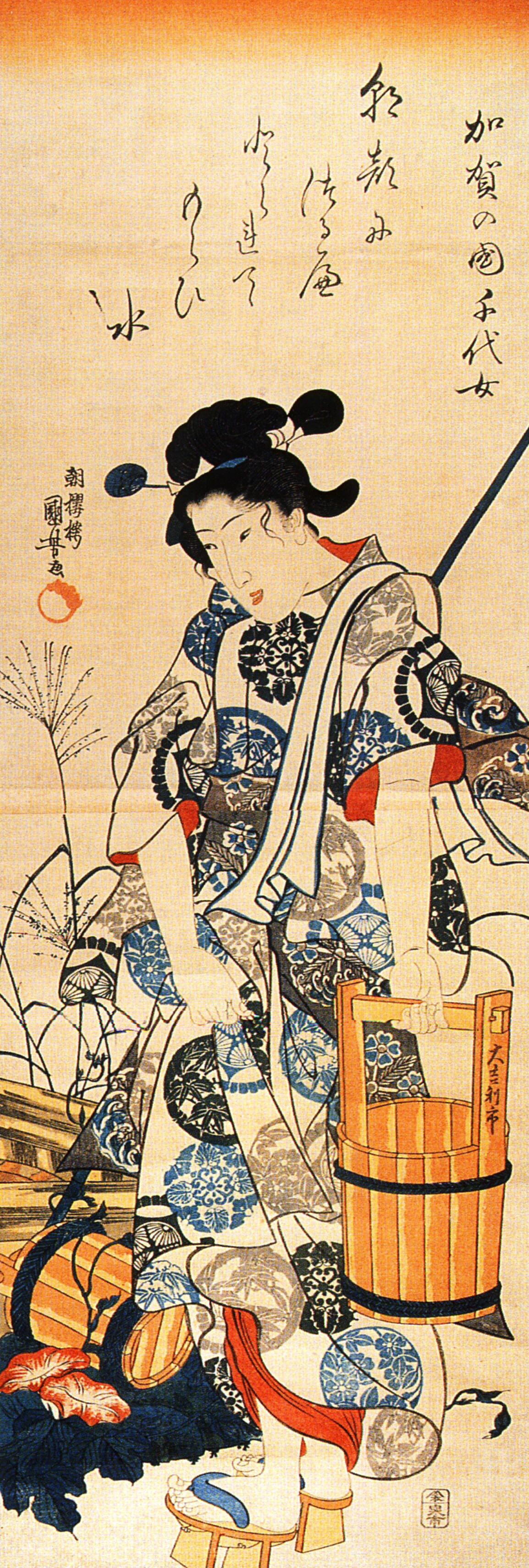
Fukuda Chiyo-ni or Kaga no Chiyo was a Japanese poet of the Edo period and a Buddhist nun. She is widely regarded as one of the greatest poets of haiku . Some of Chiyo's best works include The Morning Glory, Putting up my hair, and Again the women.
Being one of the few women haiku poets in pre-modern Japanese literature, Chiyo-ni has been seen an influential figure. Before her time, haiku by women were often dismissed and ignored. She began writing Haiku at seven and by age seventeen she had become very popular all over Japan and she continued writing throughout her life. Influenced by the renowned poet Matsuo Bashō but emerging and as independent figure with a unique voice in her own right, Chiyo-ni dedication toward her career not only paved a way for her career but it also opened a path for other women to follow. Chiyo-ni is known as a "forerunner, who played the role of encouraging international cultural exchange".She is perhaps best known for this haiku:
Today, the morning glory is a favorite flower for the people of her home town, because she left a number of poems on that flower. Shokouji temple in Hakusan contains a display of her personal effects. Wikipedia
“My hunter of dragonflies,
How far
has he wandered today?”
Source: Ikuko Atsumi, Kenneth Rexroth. Women Poets of Japan. 1982. p. 53
“"Cuckoo!"
"Cuckoo!"
While I meditated
on that theme
day dawned.”
Source: Ikuko Atsumi, Kenneth Rexroth. Women Poets of Japan. 1982. p. 53
“I saw the moon as well
and now, world,
'truly yours' …”
Japanese Death Poems. Compiled by Yoel Hoffmann. ISBN 978-0-8048-3179-6


