Averroes book On the Harmony of Religions and Philosophy
Part 1: The Creation of the Universe; Opening sentence
On the Harmony of Religions and Philosophy
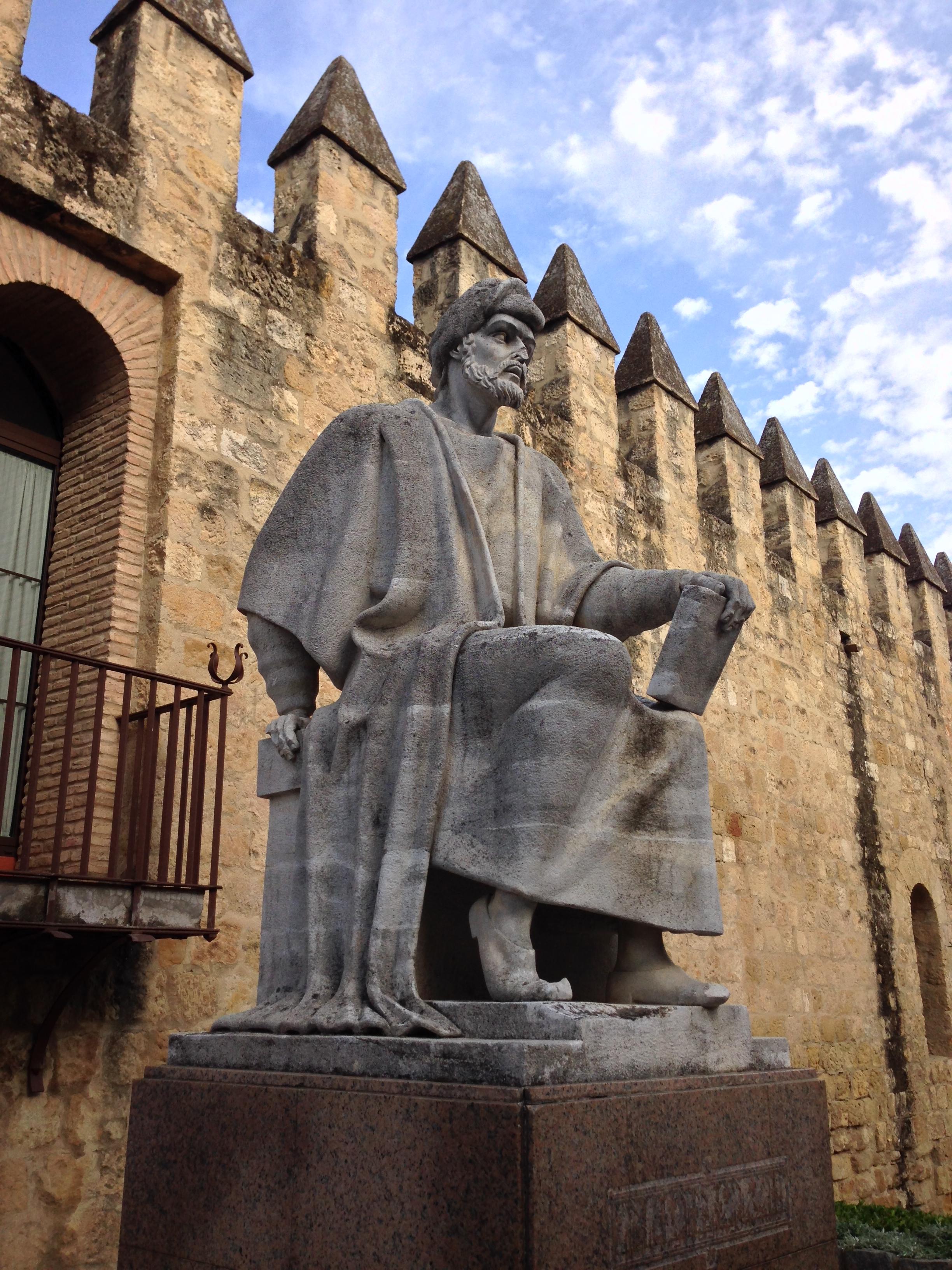
Ibn Rushd , often Latinized as Averroes , was a Muslim Andalusi philosopher and judge who wrote about many subjects, including philosophy, theology, medicine, astronomy, physics, Islamic jurisprudence and law, and linguistics. His philosophical works include numerous commentaries on Aristotle, for which he was known in the West as The Commentator. He also served as a judge and a court physician for the Almohad Caliphate.
He was born in Córdoba in 1126 to a family of prominent judges—his grandfather was the chief judge of the city. In 1169 he was introduced to the caliph Abu Yaqub Yusuf, who was impressed with his knowledge, became his patron and commissioned many of Averroes' commentaries. Averroes later served multiple terms as a judge in Seville and Córdoba. In 1182, he was appointed as court physician and the chief judge of Córdoba. After Abu Yusuf's death in 1184, he remained in royal favor until he fell into disgrace in 1195. He was targeted on various charges—likely for political reasons—and was exiled to nearby Lucena. He returned to royal favor shortly before his death on 11 December 1198.
Averroes was a strong proponent of Aristotelianism; he attempted to restore what he considered the original teachings of Aristotle and opposed the Neoplatonist tendencies of earlier Muslim thinkers, such as Al-Farabi and Avicenna. He also defended the pursuit of philosophy against criticism by Ashari theologians such as Al-Ghazali. Averroes argued that philosophy was permissible in Islam and even compulsory among certain elites. He also argued scriptural text should be interpreted allegorically if it appeared to contradict conclusions reached by reason and philosophy. In Islamic jurisprudence, he wrote the Bidāyat al-Mujtahid on the differences between Islamic schools of law and the principles that caused their differences. In medicine, he proposed a new theory of stroke, described the signs and symptoms of Parkinson's disease for the first time, and might have been the first to identify the retina as the part of the eye responsible for sensing light. His medical book Al-Kulliyat fi al-Tibb, translated into Latin and known as the Colliget, became a textbook in Europe for centuries.
His legacy in the Islamic world was modest for geographical and intellectual reasons. In the West, Averroes was known for his extensive commentaries on Aristotle, many of which were translated into Latin and Hebrew. The translations of his work reawakened Western European interest in Aristotle and Greek thinkers, an area of study that had been widely abandoned after the fall of the Roman Empire. His thoughts generated controversies in Latin Christendom and triggered a philosophical movement called Averroism based on his writings. His unity of the intellect thesis, proposing that all humans share the same intellect, became one of the most well-known and controversial Averroist doctrines in the West. His works were condemned by the Catholic Church in 1270 and 1277. Although weakened by the condemnations and sustained critique by Thomas Aquinas, Latin Averroism continued to attract followers up to the sixteenth century. Wikipedia
Averroes book On the Harmony of Religions and Philosophy
Part 1: The Creation of the Universe; Opening sentence
On the Harmony of Religions and Philosophy
“This is one of the most intricate problems of religion.”
Averroes book On the Harmony of Religions and Philosophy
Part 3: Of Fate And Predestination; Opening sentence
On the Harmony of Religions and Philosophy
Context: This is one of the most intricate problems of religion. For if you look into the traditional arguments () about this problem you will find them contradictory; such also being the case with arguments of reason. The contradiction in the arguments of the first kind is found in the Qur'an and the Hadith.
Attributed to Averroes in Voices of Islam: Voices of change (2007) by Vincent J. Cornell, p. 35
Averroes, Ralph Lerner (1974) Averroes On Plato's Republic. p. xxiv
“Knowledge is the conformity of the object and the intellect.”
Attributed to Averroes, in: John Bartlett (1968) Familiar Qutations. p. 155
FM 44 as cited in: Oliver Leaman (2002) An Introduction to Classical Islamic Philosophy, p. 179
The Decisive Treatise
The Decisive Treatise
Source: Jon McGinnis, David C. Reisman (2007) Classical Arabic Philosophy: An Anthology of Sources. p. 310
Introduction
The Decisive Treatise
Ch 1.9
The Decisive Treatise
Averroes book On the Harmony of Religions and Philosophy
On the Harmony of Religions and Philosophy
Averroes book On the Harmony of Religions and Philosophy
Part 2: The Advent of the Prophets; Opening sentence
On the Harmony of Religions and Philosophy
As cited in "Being and Language in Averroes' “Tahafut At-Tahafut” (2003) by Massimo Campanini
Averroës, Charles Edwin Butterworth (1977) Averroës' Three Short Commentaries on Aristotle's "Topics,". p. 92
Averroes book On the Harmony of Religions and Philosophy
On the Harmony of Religions and Philosophy
Averroes book On the Harmony of Religions and Philosophy
Pat 5: The Day of Judgment; Opening sentence
On the Harmony of Religions and Philosophy
Averroes book On the Harmony of Religions and Philosophy
Part 4: Divine Justice and Injustice; Opening sentence
On the Harmony of Religions and Philosophy


