
“What can't be cured must be endured.”
Anne Brontë book The Tenant of Wildfell Hall
Source: The Tenant of Wildfell Hall (1848), Ch. XXII : Traits of Friendship; Arthur to Lord Lowborough
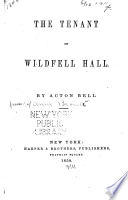
The Tenant of Wildfell Hall is the second and final novel by the English author Anne Brontë. It was first published in 1848 under the pseudonym Acton Bell. Probably the most shocking of the Brontës' novels, it had an instant and phenomenal success, but after Anne's death her sister Charlotte prevented its re-publication in England until 1854.
“What can't be cured must be endured.”
Anne Brontë book The Tenant of Wildfell Hall
Source: The Tenant of Wildfell Hall (1848), Ch. XXII : Traits of Friendship; Arthur to Lord Lowborough
Anne Brontë book The Tenant of Wildfell Hall
Source: The Tenant of Wildfell Hall (1848), Ch. IX : A Snake in the Grass; Helen to Gilbert
Anne Brontë book The Tenant of Wildfell Hall
Source: The Tenant of Wildfell Hall (1848), Ch. XVIII : The Miniature; Arthur Huntingdon
Anne Brontë book The Tenant of Wildfell Hall
Source: The Tenant of Wildfell Hall (1848), Ch. XLV : Reconciliation; Helen to Gilbert
Anne Brontë book The Tenant of Wildfell Hall
Prologue; Gilbert Markham, in the opening line of the novel
The Tenant of Wildfell Hall (1848)
Anne Brontë book The Tenant of Wildfell Hall
Source: The Tenant of Wildfell Hall (1848), Ch. XXXII : Comparisons: Information Rejected; Ralph to Milicent
Anne Brontë book The Tenant of Wildfell Hall
Source: The Tenant of Wildfell Hall (1848), Ch. III : A Controversy; Mrs. Markham to Helen
Anne Brontë book The Tenant of Wildfell Hall
Source: The Tenant of Wildfell Hall (1848), Ch. IX : A Snake in the Grass; Gilbert Markham
Anne Brontë book The Tenant of Wildfell Hall
Source: The Tenant of Wildfell Hall (1848), Ch. XVI : The Warning of Experience; Helen to Mrs. Maxwell
“It is deeds not words which must purchase my affection and esteem.”
Anne Brontë book The Tenant of Wildfell Hall
Source: The Tenant of Wildfell Hall (1848), Ch. XLVIII : Further Intelligence; Helen to Arthur
“Intimate acquaintance must precede real friendship.”
Anne Brontë book The Tenant of Wildfell Hall
Source: The Tenant of Wildfell Hall (1848), Ch. XXIX : The Neighbour; Helen to Walter
“If you had no higher motive than the approval of your fellow mortal, it would do you little good.”
Anne Brontë book The Tenant of Wildfell Hall
Source: The Tenant of Wildfell Hall (1848), Ch. XXXII : Comparisons: Information Rejected; Helen to Ralph
“Chess-players are so unsociable, they are no company for any but themselves.”
Anne Brontë book The Tenant of Wildfell Hall
Source: The Tenant of Wildfell Hall (1848), Ch. XXXIII : Two Evenings; Helen to Walter
Anne Brontë book The Tenant of Wildfell Hall
Source: The Tenant of Wildfell Hall (1848), Ch. XXVIII : Parental Feelings; Arthur to Helen
Anne Brontë book The Tenant of Wildfell Hall
Source: The Tenant of Wildfell Hall (1848), Ch. XXIX : The Neighbour; Helen Graham
Anne Brontë book The Tenant of Wildfell Hall
Source: The Tenant of Wildfell Hall (1848), Ch. XXX : Domestic Scenes; Arthur to Helen
“Those, whose time is fully occupied, seldom complain of solitude.”
Anne Brontë book The Tenant of Wildfell Hall
Source: The Tenant of Wildfell Hall (1848), Ch. XXIX : The Neighbour; Helen to Walter
Anne Brontë book The Tenant of Wildfell Hall
Source: The Tenant of Wildfell Hall (1848), Ch. XLI : Hope Springs Eternal in the Human Breast; Helen to Esther
Anne Brontë book The Tenant of Wildfell Hall
Source: The Tenant of Wildfell Hall (1848), Ch. XXX : Domestic Scenes; Helen Graham
“If we can only speak to slander our betters, let us hold our tongues.”
Anne Brontë book The Tenant of Wildfell Hall
Source: The Tenant of Wildfell Hall (1848), Ch. IX : A Snake in the Grass; Gilbert to Eliza


