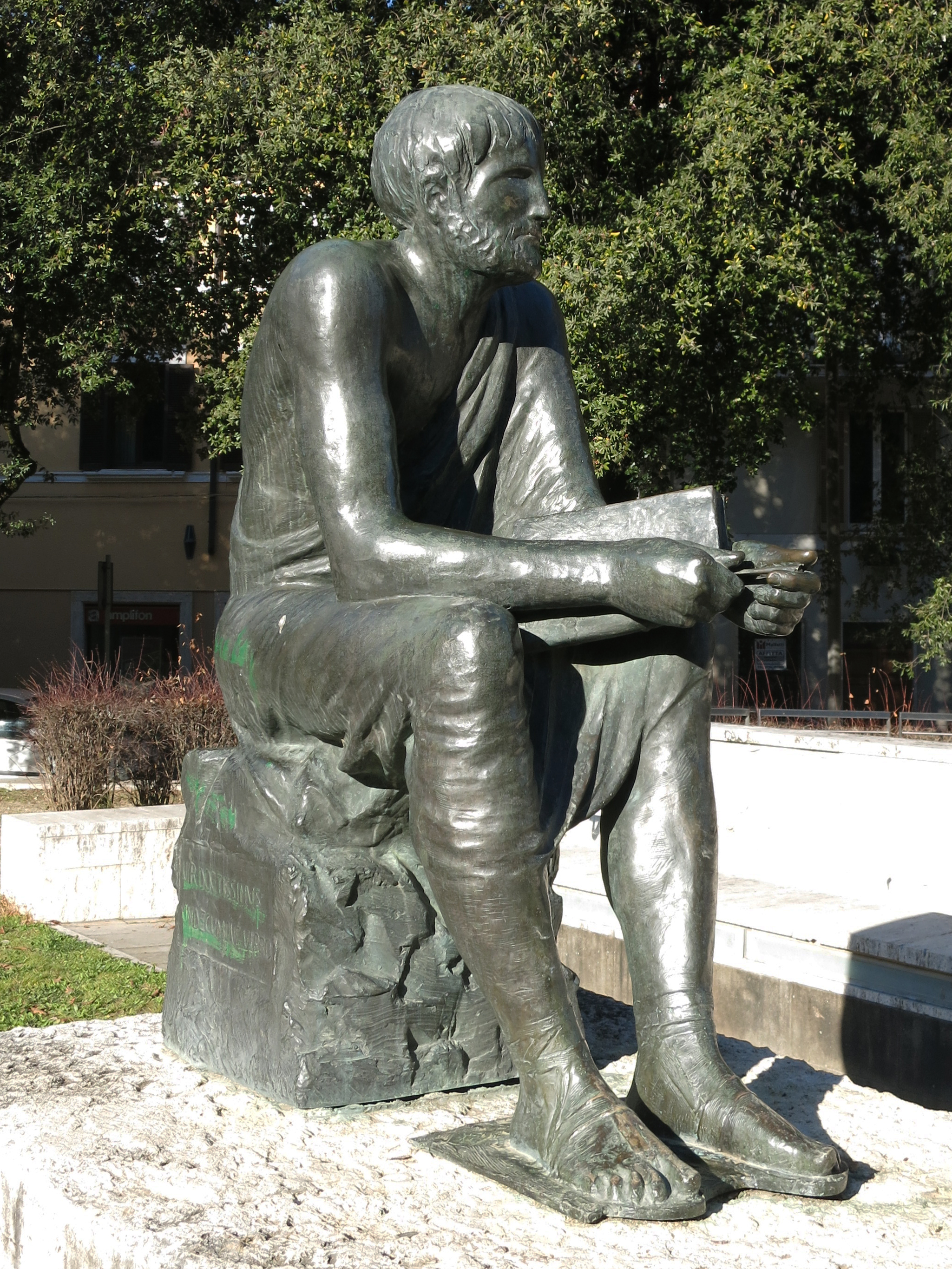
Marcus Terentius Varro idézet

Marcus Terentius Varro , gyakran csak Varro római költő, író, az ókori Róma egyik legnagyobb tudósa volt. Wikipedia  

✵ 116 i.e. – 27 i.e.
Marcus Terentius Varro fénykép
Marcus Terentius Varro: 6 idézet0 Kedvelés

Marcus Terentius Varro: Idézetek angolul

“It was divine nature which gave us the country, and man's skill that built the cities.”
Divina Natura dedit agros, ars humana ædificavit urbes.

Marcus Terentius Varro

Marcus Porcius Cato on Agriculture : Marcus Terentius Varro on Agriculture. W.D. Hooper & H.B. Ash. (translation). Harvard University Press, 1993. Bk. 3, ch. 1
De Re Rustica

“No sick man's monstrous dream can be so wild that some philosopher won't say it's true.”
Postremo nemo aegrotus quidquam somniat tam infandum, quod non aliquis dicat philosophus.

Marcus Terentius Varro

Eumenides, fragment 6, from Saturae Menippeae; translation from J. Wight Duff Roman Satire: Its Outlook on Social Life (Hamden, Conn.: Archon Books, 1964) p. 90.

“The longest part of the journey is said to be the passing of the gate.”
Portam itineri dici longissimam esse.

Marcus Terentius Varro

Marcus Porcius Cato on Agriculture : Marcus Terentius Varro on Agriculture. W.D. Hooper & H.B. Ash. (translation). Harvard University Press, 1993. Bk. 1, ch. 2;
De Re Rustica

“There are bred certain minute creatures which cannot be seen by the eyes, which float in the air and enter the body through the mouth and nose and there cause serious diseases.”
Crescunt animalia quaedam minuta, quae non possunt oculi consequi, et per aera intus in corpus per os ac nares perveniunt atque efficiunt difficilis morbos.

Marcus Terentius Varro

Marcus Porcius Cato on Agriculture : Marcus Terentius Varro on Agriculture. W.D. Hooper & H.B. Ash. (translation). Harvard University Press, 1993. Bk. 1, ch. 12
De Re Rustica

“The most learned of all Romans.”
Vir Romanorum eruditissimus.

Marcus Terentius Varro

Quintilian Institutio Oratoria Bk. 10, ch. 1, para. 95; translation by H. E. Butler. http://penelope.uchicago.edu/Thayer/E/Roman/Texts/Quintilian/Institutio_Oratoria/10A*.html#1.95 <br class="br">Criticism