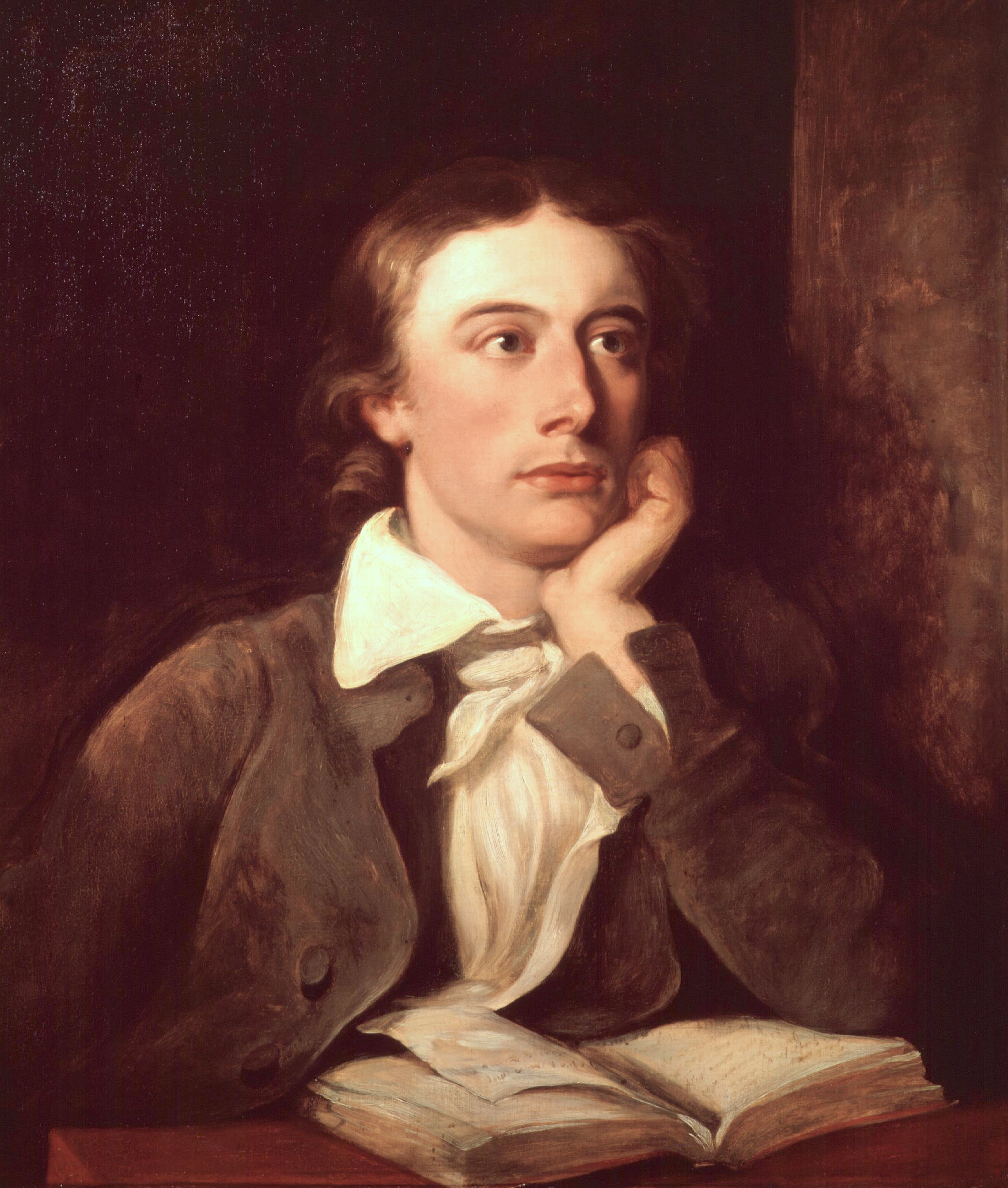
John Keats híres idézetei
John Keats idézetek
John Keats: Idézetek angolul
“The poetry of earth is never dead.”
" Sonnet. On the Grasshopper and the Cricket http://www.bartleby.com/126/28.html" <br class="br">Poems (1817)
“Heard melodies are sweet, but those unheard, are sweeter”
John Keats Ode on a Grecian Urn
Stanza 2
Poems (1820), Ode on a Grecian Urn
Változat: Heard melodies are sweet, but those unheard
Are sweeter; therefore, ye soft pipes, play on.
Forrás: Ode on a Grecian Urn and Other Poems
Kontextus: Heard melodies are sweet, but those unheard
Are sweeter: therefore, ye soft pipes, play on;
Not to the sensual ear, but, more endear’d,
Pipe to the spirit ditties of no tone.
Kontextus: Heard melodies are sweet, but those unheard
Are sweeter: therefore, ye soft pipes, play on;
Not to the sensual ear, but, more endear’d,
Pipe to the spirit ditties of no tone.
Fair youth, beneath the trees, thou canst not leave
Thy song, nor ever can those trees be bare;
Bold Lover, never, never canst thou kiss,
Though winning near the goal — yet, do not grieve;
She cannot fade, though thou hast not thy bliss,
For ever wilt thou love, and she be fair!
Forrás: Bright Star: Love Letters and Poems of John Keats to Fanny Brawne
“Nothing ever becomes real till it is experienced”
Even a proverb is no proverb to you till your Life has illustrated it.
Letter to George and Georgiana Keats (February 14-May 3, 1819)
Letters (1817–1820)
Változat: Nothing ever becomes real till it is experienced
“Shakespeare led a life of allegory: his works are the comments on it.”
Letter to George and Georgiana Keats (February 14 - May 3, 1819)
Letters (1817–1820)
Kontextus: A man's life of any worth is a continual allegory — and very few eyes can see the mystery of life — a life like the Scriptures, figurative... Lord Byron cuts a figure, but he is not figurative. Shakespeare led a life of allegory: his works are the comments on it.
“Shed no tear! O shed no tear!
The flower will bloom another year.”
"Faery Songs", I (1818)
Kontextus: Shed no tear! O shed no tear!
The flower will bloom another year.
Weep no more! O weep no more!
Young buds sleep in the root's white core.
“My love is selfish. I cannot breathe without you.”
Forrás: Bright Star: Love Letters and Poems of John Keats to Fanny Brawne
Letter to John Hamilton Reynolds (May 3, 1818)
Letters (1817–1820)
Kontextus: Axioms in philosophy are not axioms until they are proved upon our pulses: we read fine things but never feel them to the full until we have gone the same steps as the author.
“I wish I was either in your arms full of faith, or that a Thunder bolt would strike me.”
Forrás: Bright Star: Love Letters and Poems of John Keats to Fanny Brawne
then on the shore
Of the wide world I stand alone, and think
Till Love and Fame to nothingness do sink.
"When I have fears that I may cease to be" (1817)
Forrás: The Complete Poems
John Keats Sleep and Poetry
"Sleep and Poetry", st. 11
Poems (1817)
" Ode http://www.bartleby.com/126/44.html", The Fair Maid of the Inn <br class="br">Poems (1820)
“A thing of beauty is a joy forever.”
Forrás: Endymion: A Poetic Romance
Letter to Benjamin Bailey (November 22, 1817)
Letters (1817–1820)