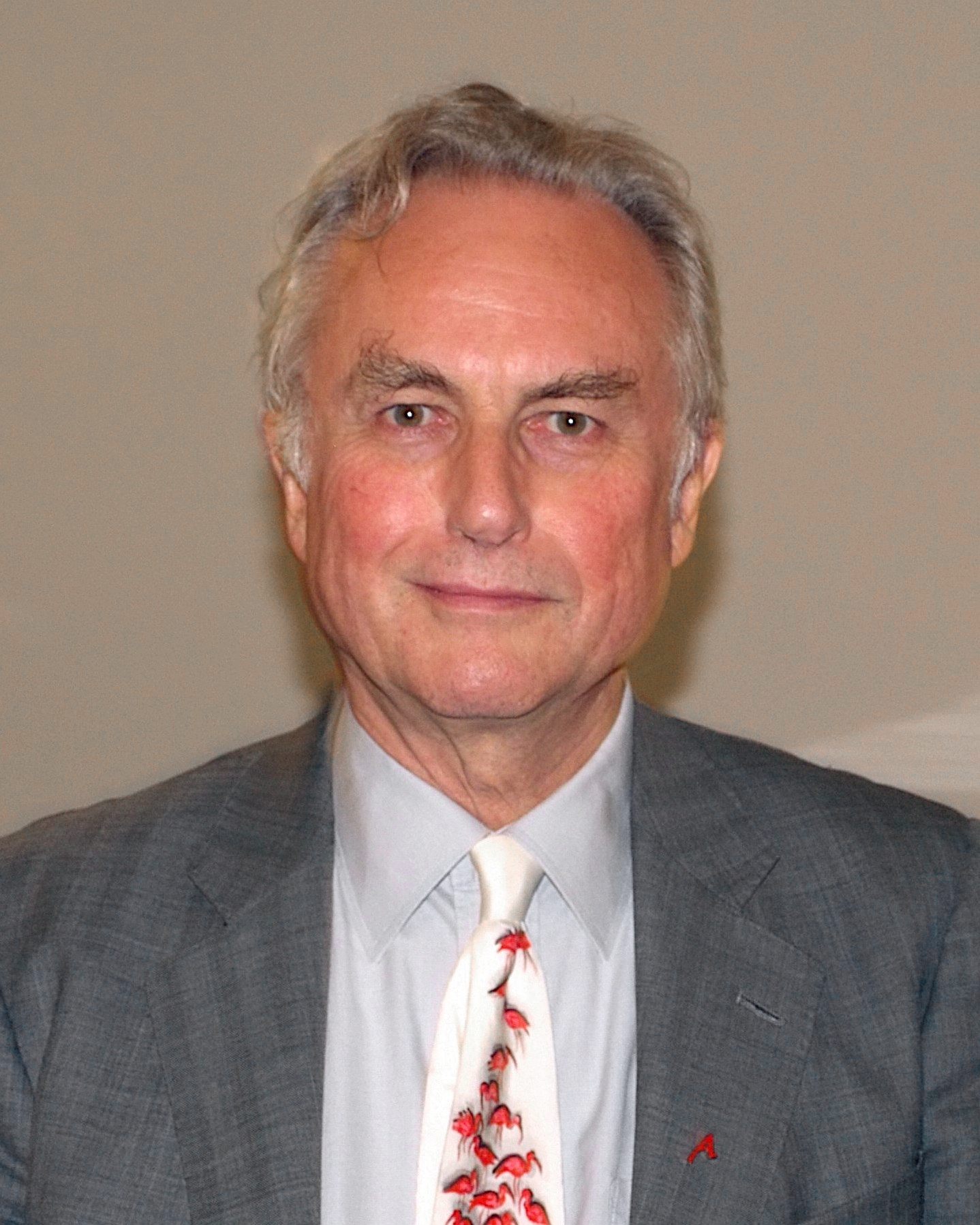
Richard Dawkins citations célèbres
Richard Dawkins livre Pour en finir avec Dieu
Pour en finir avec Dieu (The God Delusion), 2006
Richard Dawkins livre Pour en finir avec Dieu
S'ils ne sont pas extrémistes en soi, les enseignements de la religion « modérée » sont une invitation ouverte à l'extrémisme.
Pour en finir avec Dieu (The God Delusion), 2006
), 2006
Richard Dawkins livre Pour en finir avec Dieu
Pour en finir avec Dieu (The God Delusion), 2006
), 2006
en
We are going to die, and that makes us the lucky ones. Most people are never going to die because they are never going to be born. The potential people who could have been here in my place but who will in fact never see the light of day outnumber the sand grains of Sahara. Certainly those unborn ghosts include greater poets than Keats, scientists greater than Newton. We know this because the set of possible people allowed by our DNA so massively outnumbers the set of actual people. In the teeth of these stupefying odds it is you and I, in our ordinariness, that are here. We privileged few, who won the lottery of birth against all odds, how dare we whine at our inevitable return to that prior state from which the vast majority have never stirred?
Les Mystères de l'arc-en-ciel (Unweaving the Rainbow), 1998
Richard Dawkins: Citations en anglais
Richard Dawkins livre The Selfish Gene
Source: The Selfish Gene (1976, 1989), Ch. 13. The Long Reach of the Gene
Richard Dawkins livre The Selfish Gene
Source: The Selfish Gene (1976, 1989), Ch. 12. Nice Guys Finish First
Richard Dawkins livre The Selfish Gene
Source: The Selfish Gene (1976, 1989), Ch. 9. Battle of the Sexes
Richard Dawkins livre The Selfish Gene
Source: The Selfish Gene (1976, 1989), Ch. 8. Battle of the Generations
Richard Dawkins livre The Selfish Gene
Source: The Selfish Gene (1976, 1989), Ch. 2. The replicators
But how much more do you want? We are going to die, and that makes us the lucky ones. Most people are never going to die because they’re never going to be born. The number of people who could be here, in my place, outnumber the sand grains of Sahara. If you think about all the different ways in which our genes could be permuted, you and I are quite grotesquely lucky to be here, the number of events that had to happen in order for you to exist, in order for me to exist. We are privileged to be alive and we should make the most of our time on this world. <br class="br">End of the part 2: "The Virus of Faith" https://www.youtube.com/watch?v=aMUG6qd98wc <br class="br">The Root of All Evil? (January 2006)
Richard Dawkins livre Unweaving the Rainbow
Source: Unweaving the Rainbow (1998), Ch. 1 : The Anaesthetic of Familiarity; Dawkins is reported to have stated that this passage will be read at his funeral; it is often quoted with an extension which does not occur in any thus-far-checked editions of the book: "We privileged few, who won the lottery of birth against all odds, how dare we whine at our inevitable return to that prior state from which the vast majority have never stirred?"
“University is about confronting new ideas, unfamiliar, un-"safe."”
If you want to be "safe" you are not worthy of a university education. <br class="br"> https://twitter.com/richarddawkins/status/590953689826914305 (22 April 2015) <br class="br">Twitter
“I hate the neologism "owned" for "scored a victory over."”
I have no intention of owning anyone, and nobody will ever own me. <br class="br"> https://twitter.com/RichardDawkins/status/336048706853937152 (19 May 2013) <br class="br">Twitter
Richard Dawkins livre Pour en finir avec Dieu
Source: The God Delusion (2006), p. 135 of the Black Swan paperback edition of 2007
Richard Dawkins livre Pour en finir avec Dieu
Source: The God Delusion (2006), p. 57 of the Black Swan paperback edition of 2007
“science is the best way to do anything”
if you want to do terrible things with technology, a terrible weapons for example science is the best way to do it because science is the best way to do anything
Richard Dawkins livre Pour en finir avec Dieu
Source: The God Delusion (2006), p. 152 of the Black Swan paperback edition of 2007
“Another force driving progressive evolution is the so-called "arms-race."”
Prey animals evolve faster running speeds because predators do. Consequently predators have to evolve even faster running speeds, and so on, in an escalating spiral. Such arms races probably account for the spectacularly advanced engineering of eyes, ears, brains, bat "radar" and all the other high-tech weaponry that animals display.
The Evolutionary Future of Man (1993)
Heat the Hornet https://www.nairaland.com/233071/heat-hornet-why-evolution-true (a review of Jerry Coyne's book Why Evolution is True)
The Enemies of Reason (August 2007)
During his conversation with the Archbishop of Canterbury, Dr. Rowan Williams, as quoted in The Telegraph, in . In " Richard Dawkins: I can't be sure God does not exist http://www.telegraph.co.uk/news/religion/9102740/Richard-Dawkins-I-cant-be-sure-God-does-not-exist.html"
Richard Dawkins livre Climbing Mount Improbable
Source: Climbing Mount Improbable (1996), Chapter 8, “Pollen Grains and Magic Bullets” (p. 258)
Richard Dawkins livre Climbing Mount Improbable
Source: Climbing Mount Improbable (1996), Chapter 5, “The Forty-fold Path to Enlightenment” (p. 166)
Richard Dawkins livre Climbing Mount Improbable
Source: Climbing Mount Improbable (1996), Chapter 3, “The Message from the Mountain” (pp. 89-90)
“Mutation may be random, but selection definitely is not.”
Richard Dawkins livre Climbing Mount Improbable
Source: Climbing Mount Improbable (1996), Chapter 3, “The Message from the Mountain” (p. 82)
Richard Dawkins livre Climbing Mount Improbable
Source: Climbing Mount Improbable (1996), Chapter 2, “Silken Fetters” (p. 58)


