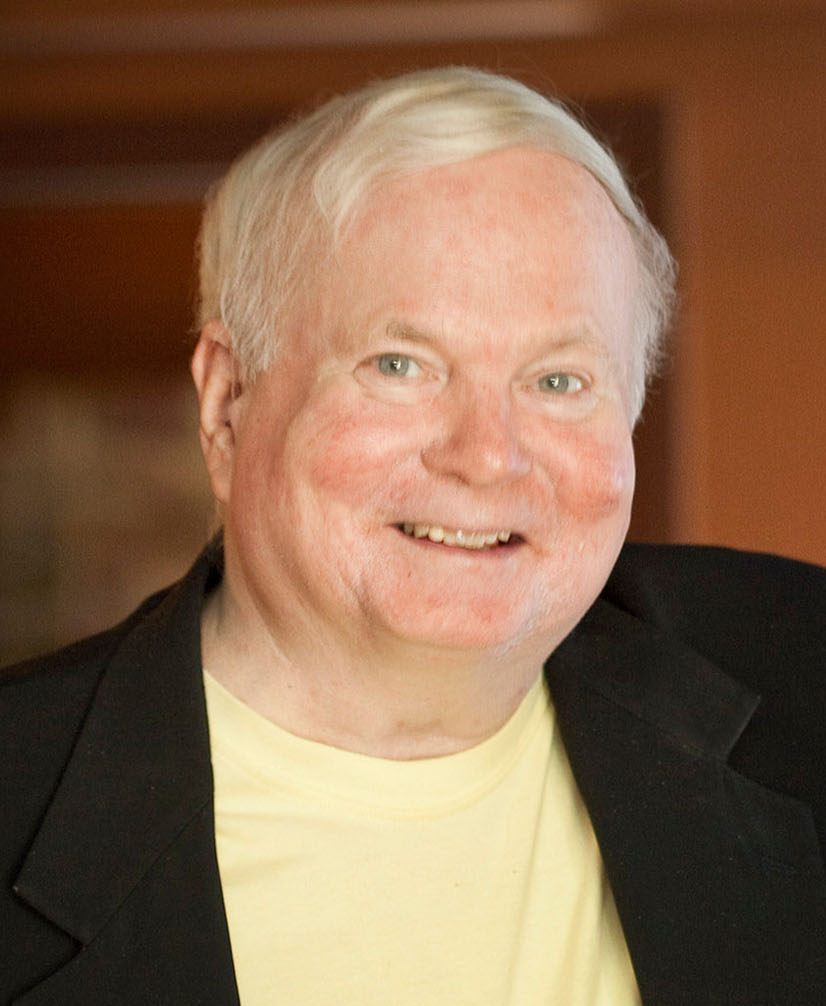
Pat Conroy citations
Page 3

Pat Conroy, né le 26 octobre 1945 à Atlanta, dans l'État de Géorgie, mort le 4 mars 2016 à Beaufort en Caroline du Sud, est un auteur à succès de romans et d'autobiographies, ses romans figurant sur la liste des best-sellers du New York Times. Wikipedia  

✵ 26. octobre 1945 – 4. mars 2016  •  Autres noms 帕特·康羅伊, פט קונורוי
Pat Conroy photo
Pat Conroy: 86 citations0 J'aime

Pat Conroy Citations

Pat Conroy: Citations en anglais

“Graduation was nice. General Clark liked it. The Board of Visitors liked it. Moms and Dads liked it. And the Cadets hated it, for without a doubt it ranked as the most boring event of the year. Thus it was in 1964 that the Clarey twins pulled the graduation classic. When Colonel Hoy called the name of the first twin, instead of walking directly to General Clark to receive his diploma, he headed for the line of visiting dignitaries, generals, and members of the Board of Visitors who sat in a solemn semi-circle around the stage. He shook hands with the first startled general, then proceeded to shake hands and exchange pleasantries with every one on the stage. He did this so quickly that it took several moments for the whole act to catch on. When it finally did, the Corps went wild. General Clark, looking like he had just learned the Allies had surrendered to Germany, stood dumbfounded with Clarey number one's diploma hanging loosely from his hand; then Clarey number two started down the line, repeating the virtuoso performance of Clarey number one, as the Corps whooped and shouted their approval. The first Clarey grabbed his diploma from Clark and pumped his hand vigorously up and down. Meanwhile, his brother was breezing through the hand-shaking exercise. As both of them left the stage, they raised their diplomas above their heads and shook them like war tomahawks at the wildly applauding audience. No graduation is remembered so well.”

Pat Conroy livre The Boo

Source: The Boo (1970), p. 33

“Cadets are people. Behind the gray suits, beneath the Pom-pom and Shako and above the miraculously polished shoes, blood flows through veins and arteries, hearts thump in a regular pattern, stomachs digest food, and kidneys collect waste. Each cadet is unique, a functioning unit of his own, a distinct and separate integer from anyone else. Part of the irony of military schools stems from the fact that everyone in these schools is expected to act precisely the same way, register the same feelings, and respond in the same prescribed manner. The school erects a rigid structure of rules from which there can be no deviation. The path has already been carved through the forest and all the student must do is follow it, glancing neither to the right nor left, and making goddamn sure he participates in no exploration into the uncharted territory around him. A flaw exists in this system. If every person is, indeed, different from every other person, then he will respond to rules, regulations, people, situations, orders, commands, and entreaties in a way entirely depending on his own individual experiences. Te cadet who is spawned in a family that stresses discipline will probably have less difficulty in adjusting than the one who comes from a broken home, or whose father is an alcoholic, or whose home is shattered by cruel arguments between the parents. Yet no rule encompasses enough flexibility to offer a break to a boy who is the product of one of these homes.”

Pat Conroy livre The Boo

Source: The Boo (1970), p. 10

“Nancy Mace has written a wonderful, timeless memoir of the great test to become the first female graduate of The Citadel. Her book is provocative, hilarious, illuminating, and true. It is also a love letter to her college and the best book about The Citadel ever written.”

Pat Conroy

Conroy's praise for In The Company Of Men (2001), by Nancy Mace, first-ever female graduate of The Citadel, displayed on the back of the dust jacket for the hardcover edition.

“The children of fighter pilots tell different stories than other kids do. None of our fathers can write a will or sell a life insurance policy or fill out a prescription or administer a flu shot or explain what a poet meant. We tell of fathers who land on aircraft carriers at pitch-black night with the wind howling out of the China Sea. Our fathers wiped out aircraft batteries in the Philippines and set Japanese soldiers on fire when they made the mistake of trying to overwhelm our troops on the ground. Your Dads ran the barber shops and worked at the post office and delivered the packages on time and sold the cars, while our Dads were blowing up fuel depots near Seoul, were providing extraordinarily courageous close air support to the beleaguered Marines at the Chosin Reservoir, and who once turned the Naktong River red with blood of a retreating North Korean battalion. We tell of men who made widows of the wives of our nations' enemies and who made orphans out of all their children. You don't like war or violence? Or napalm? Or rockets? Or cannons or death rained down from the sky? Then let's talk about your fathers, not ours. When we talk about the aviators who raised us and the Marines who loved us, we can look you in the eye and say "you would not like to have been American's enemies when our fathers passed overhead". We were raised by the men who made the United States of America the safest country on earth in the bloodiest century in all recorded history. Our fathers made sacred those strange, singing names of battlefields across the Pacific: Guadalcanal, Iwo Jima, Okinawa, the Chosin Reservoir, Khe Sanh and a thousand more. We grew up attending the funerals of Marines slain in these battles. Your fathers made communities like Beaufort decent and prosperous and functional; our fathers made the world safe for democracy.”

Pat Conroy

Eulogy for a Fighter Pilot (1998)

“I wear the ring.”

Pat Conroy The Lords of Discipline

Source: The Lords of Discipline (1980), p. 1

Auteurs similaires

Richard Bach photo
Richard Bach8
écrivain américain None
Kurt Vonnegut photo
Kurt Vonnegut29
écrivain américain None
John Steinbeck photo
John Steinbeck18
écrivain américain None
William Faulkner photo
William Faulkner18
écrivain américain None
Ray Bradbury photo
Ray Bradbury20
écrivain américain None
Jack London photo
Jack London12
écrivain américain None
Vladimir Nabokov photo
Vladimir Nabokov39
écrivain None
Francis Scott Fitzgerald photo
Francis Scott Fitzgerald18
écrivain américain None
Anaïs Nin photo
Anaïs Nin16
écrivain américaine None
Charles Bukowski photo
Charles Bukowski19
écrivain américain None