“I try to apply colors like words that shape poems, like notes that shape music.”
from: Joan Miro: Selected Writings and Interviews, M.Rowell, Thames and Hudson, 1987
1940 - 1960
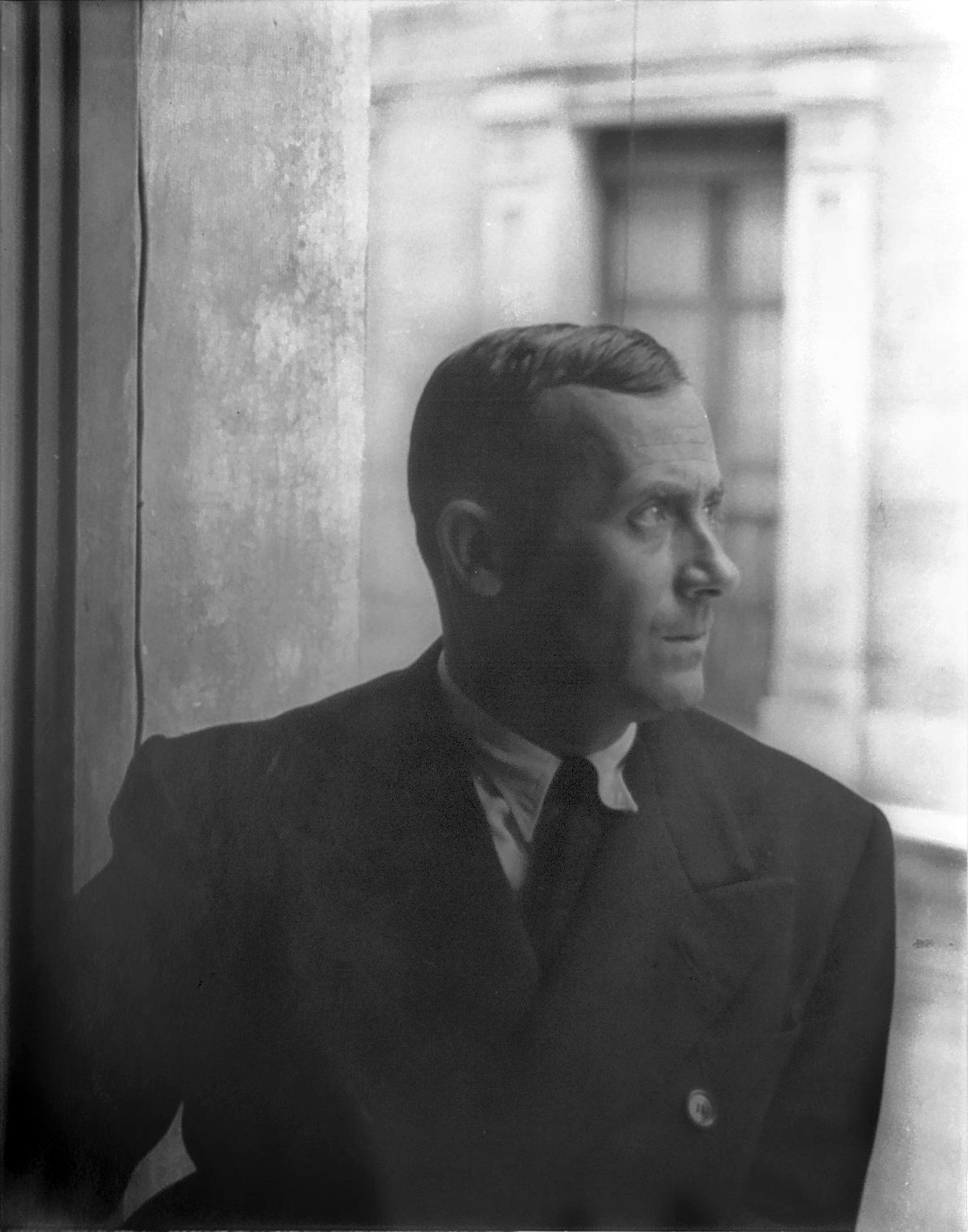
Joan Miró, né à Barcelone le 20 avril 1893 et mort à Palma de Majorque le 25 décembre 1983, est un peintre, sculpteur, graveur et céramiste espagnol. Se définissant avant tout comme « Catalan international », il est l'un des principaux représentants du mouvement surréaliste.
Son œuvre reflète son attrait pour le subconscient, pour l'« esprit enfantin » et pour son pays. À ses débuts, il montre de fortes influences fauvistes, cubistes et expressionnistes, avant d'évoluer dans de la peinture plane avec un certain côté naïf. Le tableau intitulé La Ferme, peint en 1921, est l'une des toiles les plus connues de cette époque.
Suivant son départ pour Paris, son œuvre devient plus onirique, ce qui correspond aux grandes lignes du mouvement surréaliste auquel il adhère. Dans de nombreux entretiens et écrits des années 1930, Miró manifeste son désir d'abandonner les méthodes conventionnelles de la peinture, pour — selon ses propres mots — « les tuer, les assassiner ou les violer », favorisant ainsi une forme d'expression contemporaine. Il ne veut se plier à aucune exigence, ni à celles de l'esthétique et de ses méthodes, ni à celles du surréalisme.
En son honneur, la Fondation Joan-Miró a été créée à Barcelone, en 1975. C'est un centre culturel et artistique, dévolu à la présentation des nouvelles tendances de l'art contemporain. Elle est initialement alimentée par un important fonds offert par le maître. D'autres lieux possèdent d'importantes collections d'œuvres de Miró, comme la Fondation Pilar et Joan Miró de Palma de Majorque, le Musée national d'art moderne de Paris, le musée d'art moderne de Lille et le Museum of Modern Art de New York. Wikipedia
“I try to apply colors like words that shape poems, like notes that shape music.”
from: Joan Miro: Selected Writings and Interviews, M.Rowell, Thames and Hudson, 1987
1940 - 1960
1915 - 1940
Source: a letter to art-seller in New York Pierre Matisse, [son of Henri Matisse, 19 February 1936]; the Pierre Matisse Gallery Archives, The Pierpont Morgan Library, New York MA 5020
“Have you ever heard of anything more stupid than 'abstraction-abstraction?'”
and they ask me into their deserted house [probably Miro meant the group 'Abstraction-Création', founded by a. o. Jean Arp and André Breton; both coined Miro's art in 1931 as 'mobile' and 'stabile'] as if the marks I put on a canvas did not correspond to a concrete representation of my mind, did not possess a profound reality, were not a part of the real itself.
1930s
Source: 'Où allez-vous Miró?', art critic Georges Duthuit in Cahiers d'Art 261, nos. 8-10, 1936
In a letter to Pierre Matisse, 26 January 1946; as quoted in Calder Miro, ed. Elizabeth Hutton Turner / Oliver Wick; Philip Wilson Publishers, London 2004, p. 70
1940 - 1960
Barcelona - Dada, 1917
1915 - 1940
Source: a letter to Enric C. Ricart, 1 October 1917; as quoted in Calder Miró, ed. Elizabeth Hutton Turner / Oliver Wick; Philip Wilson Publishers, London 2004, p. 47
1961 and later
Source: 'New York Times', 3 April 1969
'Working notes of Miro, 1940 – 1941'; as quoted in: Calder Miró, ed. Elizabeth Hutton Turner / Oliver Wick; Philip Wilson Publishers, London 2004, p. 69
1940 - 1960
1940 - 1960
Source: On the Readability of Signs; Miro's path from Mysterious to Comic Pictorial signs, Sylvia Martin; Düsseldorf 2002, p. 67
1915 - 1940
Source: 'Où allez-vous Miro?', Georges Duthuit in Cahiers d'Art 11, nos. 8-10, 1936
1915 - 1940
Source: 'Où allez-vous Miró?', art critic Georges Duthuit in Cahiers d'Art 261, nos. 8-10, 1936
Quote of Miró in 'Bravo' Barcelona 1994; as cited in Calder Miro, ed. Elizabeth Hutton Turner / Oliver Wick; Philip Wilson Publishers, London 2004, p. 37
1915 - 1940
from: Miro, on English Wikipedia
Miró's quote on 'automatic painting and drawing', explaining the start of his work 'Harlequin's Carnival' he made in Paris, strongly admired then by Surrealists like André Breton
1915 - 1940
Miró admonished art-critic w:Georges Duthuit
1915 - 1940
Source: 'Où allez-vous Miró?' (Where do you go, Miró), Georges Duthuit in Cahiers d'Art 11, nos. 8-10, 1936
from: English Wikipedia, Joan Miró, 1958, as quoted in Twentieth-Century Artists on Art, ed. Dore Ashton, 1986
1940 - 1960
1961 and later
Source: his 'Foreword', Barcelona 1977; as quoted in Calder Miro, ed. Elizabeth Hutton Turner / Oliver Wick; Philip Wilson Publishers, London 2004, p. 309
1915 - 1940
Source: Calder Miró, ed. Elizabeth Hutton Turner / Oliver Wick; Philip Wilson Publishers, London 2004, p. 76
In a letter to his art-seller Pierre Matisse, 12 October 1934; as quoted in Calder Miro, ed. Elizabeth Hutton Turner / Oliver Wick; Philip Wilson Publishers, London 2004, p. 82, note 24
1915 - 1940
“To gain freedom is to gain simplicity.”
Joan Miró, Joan Miró Foundation
1940 - 1960
1961 and later
Source: Revelations', Luis Permanyer, April 1978; as quoted in Calder Miró, ed. Elizabeth Hutton Turner / Oliver Wick; Philip Wilson Publishers, London 2004, p. 81 note 10
1961 and later
Miro describes his 'attacks' on the canvas
Quote of Miró in his 'Working notes, 1941 – 1942'; as cited in Calder Miró, ed. Elizabeth Hutton Turner / Oliver Wick; Philip Wilson Publishers, London 2004, p. 69
1940 - 1960
In a letter to his friend Calder, Barcelona, 18 March 1946; as quoted in Calder Miró, ed. Elizabeth Hutton Turner / Oliver Wick; Philip Wilson Publishers, London 2004, p. 268
1940 - 1960
“Painting must be fertile. It must give birth to a world.... it must fertilize the imagination.”
from: Taillandier, 1959; as quoted in Calder Miró, ed. Elizabeth Hutton Turner / Oliver Wick; Philip Wilson Publishers, London 2004, p. 82, note 24
1940 - 1960
1915 - 1940
Source: 'Je rêve d'un grand atelier', Miro 1938; as quoted in Calder Miró, ed. Elizabeth Hutton Turner / Oliver Wick; Philip Wilson Publishers, London 2004, p. 65
1961 and later
in a review of his Bernheim show, G. J. Gros, Fall 1933; as quoted in Calder Miro, ed. Elizabeth Hutton Turner / Oliver Wick; Philip Wilson Publishers, London 2004, p. 81 note 10
1915 - 1940


