“Prove your friend ere you have need, but in deed
A friend is never known till a man have need.”
Part I, chapter 11.
Proverbs (1546)
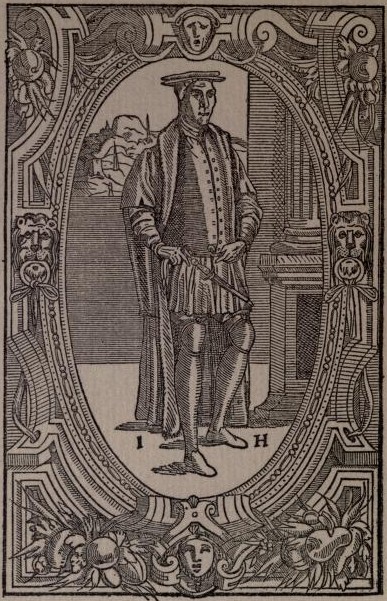
John Heywood was an English writer known for his plays, poems, and collection of proverbs. Although he is best known as a playwright, he was also active as a musician and composer, though no musical works survive.
“Prove your friend ere you have need, but in deed
A friend is never known till a man have need.”
Part I, chapter 11.
Proverbs (1546)
“I perfectly feele even at my fingers end.”
Part I, chapter 6.
Proverbs (1546), Bartlett's Familiar Quotations, 10th ed. (1919)
“Leape out of the frying pan into the fyre.”
Part II, chapter 5.
Proverbs (1546), Bartlett's Familiar Quotations, 10th ed. (1919)
“Better is halfe a lofe than no bread.”
Part I, chapter 11.
Proverbs (1546), Bartlett's Familiar Quotations, 10th ed. (1919)
Variant: Throw no gyft agayne at the geuers head,
For better is halfe a lofe than no bread.
“Fieldes have eies and woods have eares.”
Part II, chapter 5.
Proverbs (1546), Bartlett's Familiar Quotations, 10th ed. (1919)
“The greatest Clerkes be not the wisest men.”
Part II, chapter 5.
Proverbs (1546), Bartlett's Familiar Quotations, 10th ed. (1919)
“A short horse is soone currid.”
Part I, chapter 10.
Proverbs (1546), Bartlett's Familiar Quotations, 10th ed. (1919)
“While the grasse groweth the horse starveth.”
Part I, chapter 11.
Proverbs (1546), Bartlett's Familiar Quotations, 10th ed. (1919)
“A man may well bring a horse to the water,
But he cannot make him drinke without he will.”
Part I, chapter 11.
Proverbs (1546), Bartlett's Familiar Quotations, 10th ed. (1919)
Variant: A man may well bring a horse to the water,
But he cannot make him drinke without he will.
“Set the cart before the horse.”
Part II, chapter 7.
Proverbs (1546), Bartlett's Familiar Quotations, 10th ed. (1919)
“No man ought to looke a given horse in the mouth.”
Part I, chapter 5.
Proverbs (1546), Bartlett's Familiar Quotations, 10th ed. (1919)
“The grey mare is the better horse.”
Part II, chapter 4.
Proverbs (1546), Bartlett's Familiar Quotations, 10th ed. (1919)
And while I at length debate and beat the bush,
There shall step in other men, and catch the birds,
And by long time lost in many vain words.
Part I, chapter 3.
Proverbs (1546)
“Men say, kinde will creepe where it may not goe.”
Part I, chapter 11.
Proverbs (1546), Bartlett's Familiar Quotations, 10th ed. (1919)
“Som thingis that prouoke young men to wed in haste,
Show after weddyng, that hast maketh waste.”
Some things that provoke young men to wed in haste,
Show after wedding, that haste makes waste.
Part I, chapter 2.
Proverbs (1546)
“Pryde will have a fall;
For pryde goeth before and shame commeth after.”
Part I, chapter 10.
Proverbs (1546), Bartlett's Familiar Quotations, 10th ed. (1919)
Who hopes in God's help, his help can not start:
Nothing is impossible to a willing heart,
And will may win my heart, herein to consent,
To take all things as it comes, and be content.
Part I, chapter 4.
Proverbs (1546)
“I pray thee let me and my fellow have
A haire of the dog that bit us last night.”
Part I, chapter 11.
Proverbs (1546), Bartlett's Familiar Quotations, 10th ed. (1919)
Variant: A heare of the dog that bote vs last night.
“The still sowe eats up all the draffe.”
Part I, chapter 10.
Proverbs (1546), Bartlett's Familiar Quotations, 10th ed. (1919)
“It is a foule byrd that fyleth his owne nest.”
Part II, chapter 5.
Proverbs (1546), Bartlett's Familiar Quotations, 10th ed. (1919)
“He must needes goe whom the devill doth drive.”
Part II, chapter 7.
Proverbs (1546), Bartlett's Familiar Quotations, 10th ed. (1919)
“God never sends th' mouth but he sendeth meat.”
Part I, chapter 4.
Proverbs (1546), Bartlett's Familiar Quotations, 10th ed. (1919)
Rome was not built in one day, said he, and yet stood
Till it was finished, as some say, full fair.
Part I, chapter 11.
Proverbs (1546)
“To th' end of a shot and beginning of a fray.”
Part II, chapter 7.
Proverbs (1546), Bartlett's Familiar Quotations, 10th ed. (1919)
“All is fish that comth to net.”
Part I, chapter 11.
Proverbs (1546), Bartlett's Familiar Quotations, 10th ed. (1919)
“Ka me, ka the, one good tourne askth an other.”
Serve me, serve thee, one good turn asks another.
Part I, chapter 11.
Proverbs (1546)
Variant: One good turne asketh another.
“The nere to the churche, the ferther from God.”
The nearer to the church, the farther from God.
Part I, chapter 9.
Proverbs (1546)
“A fooles bolt is soone shot.”
Part II, chapter 3.
Proverbs (1546), Bartlett's Familiar Quotations, 10th ed. (1919)
“Who is worse shod than the shoemaker's wife?”
Part I, chapter 11.
Proverbs (1546), Bartlett's Familiar Quotations, 10th ed. (1919)
Variant: Who is wurs shod, than the shoemakers wyfe,
With shops full of shoes all hir lyfe?
“Two heddis are better then one.”
Two heads are better than one.
Part I, chapter 9.
Proverbs (1546)
“Many handis make light warke.”
Many hands make light work.
Part II, chapter 5.
Proverbs (1546)
Variant: Many hands make light work.
“Thrée maie a kepe counsayle, if two be away.”
Three may keep counsel, if two be away.
Part II, chapter 5.
Proverbs (1546)
Proverbs (1546)
Variant: And ones their hastie heate a littell controlde,
Than perceiue they well, hotte love soone colde.
And whan hasty witlesse mirth is mated weele,
Good to be mery and wise, they thinke and feele.
“The moone is made of a greene cheese.”
Part II, chapter 7.
Proverbs (1546), Bartlett's Familiar Quotations, 10th ed. (1919)
Time is fickle, and out of sight out of mind.
Than catch and hold while I may, fast bind fast find.
Part I, chapter 3.
Proverbs (1546)
“Than farewell riches, the fat is in the fire,
And neuer shall I to like riches aspire.”
Then farewell riches, the fat is in the fire,
And never shall I to like riches aspire.
Part I, chapter 3.
Proverbs (1546)
“She looketh as butter would not melt in her mouth.”
Part I, chapter 10.
Proverbs (1546), Bartlett's Familiar Quotations, 10th ed. (1919)
“Who is so deafe or so blinde as is hee
That wilfully will neither heare nor see?”
Part II, chapter 9.
Proverbs (1546), Bartlett's Familiar Quotations, 10th ed. (1919)
“The rolling stone never gathereth mosse.”
Part I, chapter 11.
Proverbs (1546), Bartlett's Familiar Quotations, 10th ed. (1919)
Yes yes, said she, for all those wise words uttered,
I know on which side my bread is buttered.
But there will no butter cleave on my bread.
And on my bread any butter to be spread.
Every promise that you therein do utter,
Is as sure as it were sealed with butter.
Part II, chapter 7.
Proverbs (1546)
“The wise man sayth, store is no sore.”
Part I, chapter 5.
Proverbs (1546), Bartlett's Familiar Quotations, 10th ed. (1919)
“It will not out of the flesh that is bred in the bone.”
Part II, chapter 8.
Proverbs (1546), Bartlett's Familiar Quotations, 10th ed. (1919)
Be Merry Friends; reported in Bartlett's Familiar Quotations, 10th ed. (1919).
“Be the day never so long,
Evermore at last they ring to evensong.”
Part II, chapter 7.
Proverbs (1546), Bartlett's Familiar Quotations, 10th ed. (1919)
“This wonder (as wonders last) lasted nine daies.”
Part II, chapter 1.
Proverbs (1546), Bartlett's Familiar Quotations, 10th ed. (1919)
“Better to give then to take.”
Part I, chapter 5.
Proverbs (1546), Bartlett's Familiar Quotations, 10th ed. (1919)
“Much water goeth by the mill
That the miller knoweth not of.”
Part II, chapter 5.
Proverbs (1546), Bartlett's Familiar Quotations, 10th ed. (1919)
… Better is to bow than break.
It hurts not the tongue to give faire words.
The rough net is not the best catcher of Birds.
Since you can not win, if you can not please,
Best is to suffer: For of sufferance comes ease.
Part I, chapter 9.
Proverbs (1546)
“When the steede is stolne, shut the stable durre.”
Part I, chapter 10.
Proverbs (1546), Bartlett's Familiar Quotations, 10th ed. (1919)
“Praie and shifte eche one for him selfe, as he can.
Euery man for him selfe, and god for us all.”
Pray and shift each one for himself, as he can.
Every man for himself, and God for us all.
Part II, chapter 9.
Proverbs (1546)
“Enough is as good as a feast.”
Part II, chapter 11.
Proverbs (1546), Bartlett's Familiar Quotations, 10th ed. (1919)
“Children learne to creepe ere they can learne to goe.”
Part I, chapter 11.
Proverbs (1546), Bartlett's Familiar Quotations, 10th ed. (1919)
Variant: Children learne to creepe ere they can learne to goe.
“It is a deere collop
That is cut out of th' owne flesh.”
Part I, chapter 10.
Proverbs (1546), Bartlett's Familiar Quotations, 10th ed. (1919)
“The cat would eate fish, and would not wet her feete.”
Part I, chapter 11.
Proverbs (1546), Bartlett's Familiar Quotations, 10th ed. (1919)
She speaks as she would creep into your bosom.
And when the mealy mouth has won the bottom
of your stomach, then will the pickthank it tell
To your most enemies, you to buy and sell.
To tell tales out of school, that is her great lust.
Look what she knows, blab it wist, out it must.
Part I, chapter 10.
Proverbs (1546)
“There is no fyre without some smoke.”
There is no fire without some smoke.
Part II, chapter 5.
Proverbs (1546)
Variant: There is no fyre without some smoke.
When all candles are out, all cats are grey,
All things are then of one color, as who say.
And this proverb faith, for quenching hot desire,
Foul water as soon as faire, will quench hot fire.
Part I, chapter 5.
Proverbs (1546)
“She is nether fish nor flesh, nor good red herring.”
Part I, chapter 10.
Proverbs (1546), Bartlett's Familiar Quotations, 10th ed. (1919)
That much is my bow bent to shoot at these marks,
And kill fear, when the sky falls we shall have larks.
Part I, chapter 4.
Proverbs (1546)
“I know on which side my bread is buttred.”
Part II, chapter 7.
Proverbs (1546), Bartlett's Familiar Quotations, 10th ed. (1919)
“Time trieth troth in every doubt.”
Part II, chapter 5.
Proverbs (1546), Bartlett's Familiar Quotations, 10th ed. (1919)
“All is not Gospell that thou doest speake.”
Part II, chapter 2.
Proverbs (1546), Bartlett's Familiar Quotations, 10th ed. (1919)
“Now for good lucke, cast an old shooe after me.”
Part I, chapter 9.
Proverbs (1546), Bartlett's Familiar Quotations, 10th ed. (1919)


