
David Chalmers livre The Conscious Mind
The Conscious Mind: In Search of a Fundamental Theory (1996)
David Chalmers, né le 20 avril 1966 à Sydney, est un philosophe australien spécialisé en philosophie de l'esprit.
Actuellement enseignant à l'université de New York, il a publié de nombreux travaux sur la conscience. Il est particulièrement connu pour sa formulation du problème difficile de la conscience, distinguant des problèmes faciles et LE problème difficile de savoir à quoi pourrait ressembler une théorie rendant compte de notre expérience de la conscience. Il soutient à ce sujet une forme de monisme neutre proche de celui de Bertrand Russell. Son livre sur le sujet, L’Esprit conscient, est considéré comme l'un des plus importants de ces 15 dernières années. Il s'est également penché sur des thématiques comme celle de l'expérience de pensée du cerveau dans une cuve ou celle du zombie .
Il a compilé une bibliographie de nombreux articles relatifs aux problèmes de l'esprit, bibliographie qui est disponible sur internet. Il est aussi l'auteur de plusieurs manuels de philosophie de langue anglaise. Wikipedia
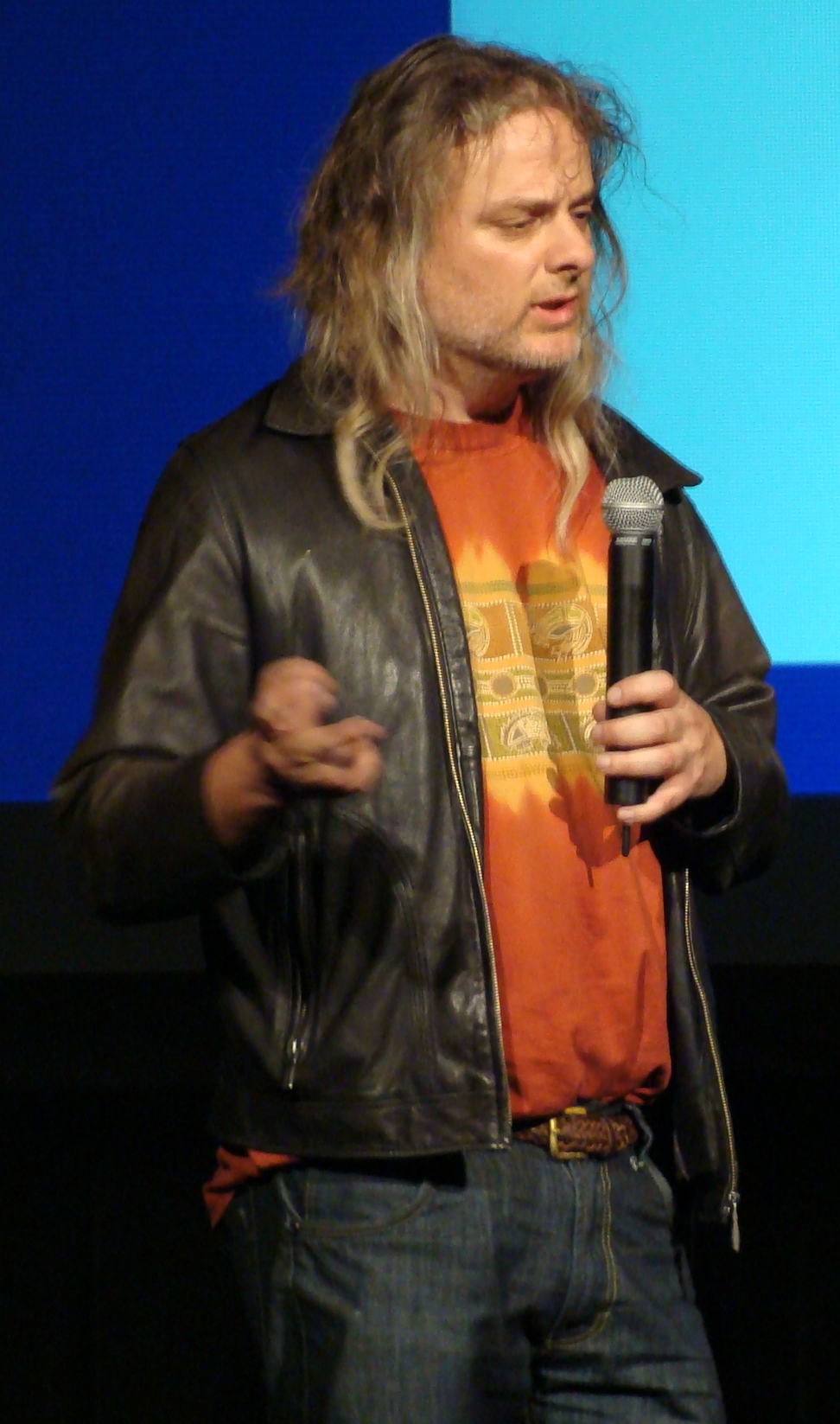
David Chalmers livre The Conscious Mind
The Conscious Mind: In Search of a Fundamental Theory (1996)
"Facing Up to the Problem of Consciousness," 1995
“Conscious experience is at once the most familiar thing in the world and the most mysterious.”
David Chalmers livre The Conscious Mind
The Conscious Mind: In Search of a Fundamental Theory (1996)
"Facing Up to the Problem of Consciousness," 1995
David Chalmers livre The Conscious Mind
The Conscious Mind: In Search of a Fundamental Theory (1996)
David Chalmers livre The Conscious Mind
The Conscious Mind: In Search of a Fundamental Theory (1996)
David Chalmers livre The Conscious Mind
The Conscious Mind: In Search of a Fundamental Theory (1996)
"Facing Up to the Problem of Consciousness," 1995
When we think and perceive, there is a whir of information-processing, but there is also a subjective aspect. ...When we see, for example, we experience visual sensations: the felt quality of redness, the experience of dark and light, the quality of depth in a visual field. Other experiences go along with perception in different modalities: the sound of a clarinet, the smell of mothballs. Then there are bodily sensations, from pains to orgasms; mental images that are conjured up internally; the felt quality of emotion, and the experience of a stream of conscious thought.
"Facing Up to the Problem of Consciousness," 1995