
Claude Lévi-Strauss livre Race et Histoire
Race et Histoire, 1952
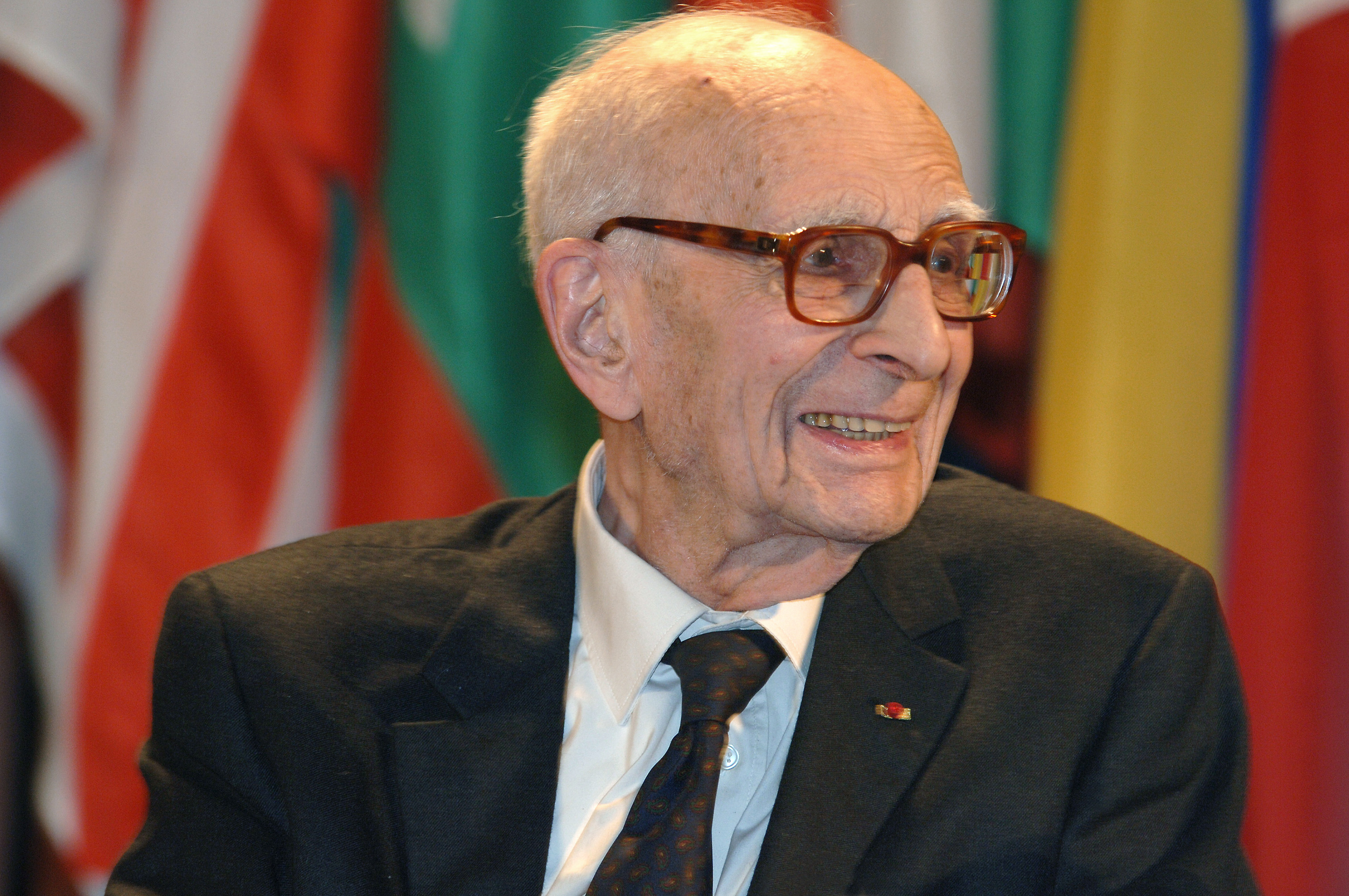
Claude Lévi-Strauss [klod levi stʁos], né le 28 novembre 1908 à Bruxelles et mort le 30 octobre 2009 à Paris, est un anthropologue et ethnologue français qui a exercé une influence majeure à l'échelle internationale sur les sciences humaines et sociales dans la seconde moitié du XXe siècle. Il est devenu notamment l'une des figures fondatrices du structuralisme à partir des années 1950 en développant une méthodologie propre, l'anthropologie structurale, par laquelle il a renouvelé en profondeur l'ethnologie et l'anthropologie en leur appliquant les principes holistes issus de la linguistique, de la phonologie, des mathématiques et des sciences naturelles.
Professeur agrégé de philosophie et enseignant au début des années 1930, il se tourne à partir de 1935 vers l'ethnologie, dont il va faire son métier. Après ses premiers travaux de terrain sur les peuples indigènes du Brésil entre 1935 et 1939, il est contraint de s'exiler en 1941 à New York ; où il rencontre de grandes figures des sciences humaines et sociales, dont le phonologue russe Roman Jakobson, auprès de qui il s'initie aux principes de l'analyse structurale et de la linguistique moderne. À partir de cette découverte décisive qu'il choisit d'appliquer à la parenté, il élabore les principes de l'anthropologie structurale, en rupture radicale avec les courants alors dominants en ethno-anthropologie : il cherche à expliquer la société et ses manifestations comme un tout doté d'une cohérence interne autorégulée, échappant à la conscience des individus. À son retour en France, il soutient et publie en 1949 sa thèse sur Les Structures élémentaires de la parenté, première application de sa méthode novatrice, qui lui apporte une notoriété précoce parmi les anthropologues de nombreux pays.
Durant les années 1950, il enseigne en France, où il est directeur d'étude à l'Ecole pratique des hautes études, et aux États-Unis et consolide les principes de sa méthode structurale, qu'il présente en 1958 au public sous la forme d'un recueil d'articles, Anthropologie structurale, premier d'une série d'ouvrages méthodologiques. Ses travaux apportent un éclairage neuf sur un grand nombre de problématiques anthropologiques classiques jusqu'alors mal connues ou inexpliquées. Ils acquièrent rapidement un rayonnement international et inspirent d'autres disciplines, participant dans une large mesure à la naissance du mouvement structuraliste français. Élu en 1959 à la chaire d'anthropologie sociale du Collège de France, Lévi-Strauss quitte le champ de la parenté et continue avec Le Totémisme aujourd'hui et La Pensée sauvage à revisiter les grandes thématiques anthropologiques, bouleversant le regard occidental sur les sociétés sans écriture. Puis, durant près d'une décennie, il se consacre à une approche structurale des mythes, publiant entre 1964 et 1971 les quatre volumes des Mythologiques, son œuvre majeure. Dans les années 1970 puis après sa retraite en 1982, il adapte sa méthode scientifique à l'évolution générale du paradigme structuraliste vers la dimension temporelle , travaillant notamment avec les historiens des Annales à la naissance de l'anthropologie historique sur des thèmes comme la famille, la parenté cognatique, le système à maison. Parallèlement, tout au long de sa carrière, il participe à la réflexion sur les sciences sociales et leur organisation institutionnelle, et réexamine de façon critique de vastes thématiques des sciences humaines comme l'art, le progrès, la race, les rapports entre nature et culture, le développement et la condition humaine.
Auteur, à côté de ses nombreux ouvrages de caractère universitaire, d'un livre plus littéraire et autobiographique, Tristes Tropiques, qui connut dès sa parution en 1955 un large succès public en France comme à l'étranger, Lévi-Strauss a été élu en 1973 à l'Académie française. Ayant acquis à partir des années 1980 une très grande stature intellectuelle, consacrée en 2008 par l'entrée de son vivant dans la prestigieuse collection de la Pléiade, il reste présent dans les médias et les débats de société jusqu'à un âge avancé. Sa pensée, qui avait perdu après les années 1970 une grande partie de son influence dans les sciences sociales avec le reflux du paradigme structuraliste et holiste, connaît une nouvelle vitalité à partir des années 2000 en philosophie des sciences et des mathématiques, autour de la notion-clé de transformation. Wikipedia
Claude Lévi-Strauss livre Race et Histoire
Race et Histoire, 1952
Claude Lévi-Strauss livre Race et Histoire
Race et histoire
Claude Lévi-Strauss livre Race et Histoire
Race et histoire
, 1952
Variante: La tolérance n'est pas une position contemplative, dispensant les indulgences à ce qui fut ou à ce qui est. C'est une attitude dynamique, qui consiste à prévoir, à comprendre et à promouvoir ce qui veut être.
Claude Lévi-Strauss livre Race et Histoire
Race et histoire
Claude Lévi-Strauss livre Race et Histoire
Race et histoire
“Je hais les voyages et les explorateurs.”
, 1955
Variante: Je hais les voyages et les explorateurs
Claude Lévi-Strauss livre Race et Histoire
Race et histoire
Claude Lévi-Strauss livre Race et Histoire
Race et histoire
Claude Lévi-Strauss livre Race et Histoire
Race et histoire
Claude Lévi-Strauss livre Race et Histoire
Race et histoire
, 1955
, 1955
Claude Lévi-Strauss livre Tristes Tropiques
Tristes Tropiques, 1955
, 1952
Mythologiques 3. L’Origine des manières de table, 1968
L'œuvre de Claude Lévi-Strauss décrite par Jean Pouillon
, 1952
Claude Lévi-Strauss, De près et de loin, entretien, Odile Jacob, 1988.
De près et de loin, entretien, 1988
Claude Lévi-Strauss livre Race et Histoire
L'exemple de la poudre à canon
Race et Histoire, 1952
Claude Lévi-Strauss livre Tristes Tropiques
Tristes Tropiques, 1955
Claude Lévi-Strauss livre Tristes Tropiques
Tristes Tropiques, 1955
, 1955
“The police are not entrusted with a mission which differentiates them from those they serve.”
Claude Lévi-Strauss livre Tristes Tropiques
Source: Tristes Tropiques (1955), Chapter 37 : The Apotheosis of Augustus, p. 378
Contexte: The police are not entrusted with a mission which differentiates them from those they serve. Being unconcerned with ultimate purposes, they are inseparable from the persons and interests of their masters, and shine with their reflected glory.
Claude Lévi-Strauss livre Tristes Tropiques
Source: Tristes Tropiques (1955), Chapter 38 : A Little Glass of Rum, pp.388-389
Contexte: Logically, the "infantilization" of the culprit implied by the notion of punishment demands that he should have a corresponding right to a reward, in the absence of which the initial procedure will prove ineffective and may even lead to results contrary to those that were hoped for. Our system is the height of absurdity, since we treat the culprit both as a child, so as to have the right to punish him, and as an adult, in order to deny him consolation; and we believe we have made great spiritual progress because, instead of eating a few of our fellow-men, we subject them to physical and moral mutilation.
Claude Lévi-Strauss livre Tristes Tropiques
Source: Tristes Tropiques (1955), Ch. 1 : Setting Out, p. 17
Contexte: I hate travelling and explorers. Yet here I am proposing to tell the story of my expeditions. But how long it has taken me to make up my mind to do so! It is now fifteen years since I left Brazil for the last time and all during this period I have often planned to undertake the present work but on each occasion a sort of shame and repugnance prevented me from making a start. Why, I asked myself, should I give a detailed account of so many trivial circumstances and insignificant happenings? Adventure has no place in the anthropologists profession; it is merely one of those unavoidable drawbacks, which detract from his effective work through the incidental loss of weeks or months; there are hours of inaction when the informant is not available; periods of hunger, exhaustion, sickness perhaps; and always the thousand and one dreary tasks which eat away the days to no purpose and reduce dangerous living in the heart of the virgin forest to an imitation of military service … The fact that so much effort and expenditure has to be wasted on reaching the object of our studies bestows no value on that aspect of our profession, and should be seen rather as its negative side. The truths which we seek so far afield only become valid when we have separated them from this dross.
“I hate travelling and explorers.”
Claude Lévi-Strauss livre Tristes Tropiques
Source: Tristes Tropiques (1955), Ch. 1 : Setting Out, p. 17
Contexte: I hate travelling and explorers. Yet here I am proposing to tell the story of my expeditions. But how long it has taken me to make up my mind to do so! It is now fifteen years since I left Brazil for the last time and all during this period I have often planned to undertake the present work but on each occasion a sort of shame and repugnance prevented me from making a start. Why, I asked myself, should I give a detailed account of so many trivial circumstances and insignificant happenings? Adventure has no place in the anthropologists profession; it is merely one of those unavoidable drawbacks, which detract from his effective work through the incidental loss of weeks or months; there are hours of inaction when the informant is not available; periods of hunger, exhaustion, sickness perhaps; and always the thousand and one dreary tasks which eat away the days to no purpose and reduce dangerous living in the heart of the virgin forest to an imitation of military service … The fact that so much effort and expenditure has to be wasted on reaching the object of our studies bestows no value on that aspect of our profession, and should be seen rather as its negative side. The truths which we seek so far afield only become valid when we have separated them from this dross.
Claude Lévi-Strauss livre Tristes Tropiques
Source: Tristes Tropiques (1955), Chapter 4 : The Quest for Power, p. 43
Contexte: While I complain of being able to glimpse no more than the shadow of the past, I may be insensitive to reality as it is taking shape at this very moment, since I have not reached the stage of development at which I would be capable of perceiving it. A few hundred years hence, in this same place, another traveller, as despairing as myself, will mourn the disappearance of what I might have seen, but failed to see.
Claude Lévi-Strauss livre Tristes Tropiques
Source: Tristes Tropiques (1955), Chapter 9 : Guanabara, p. 86
Contexte: Not only does a journey transport us over enormous distances, it also causes us to move a few degrees up or down in the social scale. It displaces us physically and also — for better or for worse — takes us out of our class context, so that the colour and flavour of certain places cannot be dissociated from the always unexpected social level on which we find ourselves in experiencing them.
As quoted in his obituary, Daily Telegraph (4 November 2009) http://www.telegraph.co.uk/news/obituaries/science-obituaries/6496558/Claude-Levi-Strauss.html <br class="br">Contexte: The idea behind structuralism is that there are things we may not know but we can learn how they are related to each other. This has been used by science since it existed and can be extended to a few other studies — linguistics and mythology — but certainly not to everything.<br>The great speculative structures are made to be broken. There is not one of them that can hope to last more than a few decades, or at most a century or two.
Claude Lévi-Strauss livre Tristes Tropiques
Source: Tristes Tropiques (1955), Ch. 1 : Setting Out, p. 17
Contexte: I hate travelling and explorers. Yet here I am proposing to tell the story of my expeditions. But how long it has taken me to make up my mind to do so! It is now fifteen years since I left Brazil for the last time and all during this period I have often planned to undertake the present work but on each occasion a sort of shame and repugnance prevented me from making a start. Why, I asked myself, should I give a detailed account of so many trivial circumstances and insignificant happenings? Adventure has no place in the anthropologists profession; it is merely one of those unavoidable drawbacks, which detract from his effective work through the incidental loss of weeks or months; there are hours of inaction when the informant is not available; periods of hunger, exhaustion, sickness perhaps; and always the thousand and one dreary tasks which eat away the days to no purpose and reduce dangerous living in the heart of the virgin forest to an imitation of military service … The fact that so much effort and expenditure has to be wasted on reaching the object of our studies bestows no value on that aspect of our profession, and should be seen rather as its negative side. The truths which we seek so far afield only become valid when we have separated them from this dross.
Claude Lévi-Strauss livre Tristes Tropiques
Source: Tristes Tropiques (1955), Chapter 4 : The Quest for Power, p. 38
Contexte: The order and harmony of the Western world, its most famous achievement, and a laboratory in which structures of a complexity as yet unknown are being fashioned, demand the elimination of a prodigious mass of noxious by-products which now contaminate the globe. The first thing we see as we travel round the world is our own filth, thrown into the face of mankind.
Claude Lévi-Strauss livre Tristes Tropiques
Source: Tristes Tropiques (1955), Chapter 16 : Markets p. 149
Structural Anthropology, Volume 2 (1973), trans. Monique Layton, University of Chicago Press, 1983, p. 41 https://books.google.it/books?id=hI74gavU7J4C&pg=PA41
Claude Lévi-Strauss livre Tristes Tropiques
Source: Tristes Tropiques (1955), Chapter 11 : São Paulo, p. 95
Claude Lévi-Strauss livre The Raw and the Cooked
Mythologiques I: Le cru et le cuit (1964)
Claude Lévi-Strauss livre Tristes Tropiques
Source: Tristes Tropiques (1955), Chapter 23 : The Living and the Dead, p. 246
Claude Lévi-Strauss livre Tristes Tropiques
Source: Tristes Tropiques (1955), Chapter 38 : A Little Glass of Rum, p. 393
Claude Lévi-Strauss livre Tristes Tropiques
Source: Tristes Tropiques (1955), Chapter 16 : Markets, p. 148
Source: Myth and Meaning (1978), Chapter 4 : When Myth Becomes History
Introduction
Myth and Meaning (1978)
"La leçon de sagesse des vaches folles" [The wise lesson of mad cows], in Études rurales (2001); as quoted in Matthieu Ricard, A Plea for the Animals, trans. Sherab Chödzin Kohn, Shambhala Publications, 2016, p. 68 https://books.google.it/books?id=bTLuDAAAQBAJ&pg=PA68
Source: Myth and Meaning (1978), Chapter 1 : The Meeting of Myth and Science
Claude Lévi-Strauss livre The Raw and the Cooked
The Raw and the Cooked : Introduction to a Science of Mythology (1975) Vol. I, [Le Cru et le Cuit, as translated by Doreen and John Weightman], p. 113
Claude Lévi-Strauss livre Tristes Tropiques
Source: Tristes Tropiques (1955), Chapter 16 : Markets p. 149
Claude Lévi-Strauss livre Tristes Tropiques
Source: Tristes Tropiques (1955), Chapter 6 : The Making of an Anthropologist, p. 55
Source: Myth and Meaning (1978), Chapter 1 : The Meeting of Myth and Science
Notes in an early work, often cited as an extreme example of androcentrism, even among leading anthropologists, " Contribution à l'étude de l'organisation sociale des Indiens Bororo http://www.persee.fr/web/revues/home/prescript/article/jsa_0037-9174_1936_num_28_2_1942?_Prescripts_Search_tabs1=standard&" (1936) p. 283
Source: Myth and Meaning (1978), Chapter 2 : ‘Primitive’ Thinking and the ‘Civilized’ Mind
Claude Lévi-Strauss livre Tristes Tropiques
Source: Tristes Tropiques (1955), Chapter 16 : Markets, p. 148


