Ayaan Hirsi Ali livre Infidel
Introduction
Infidel (2007)
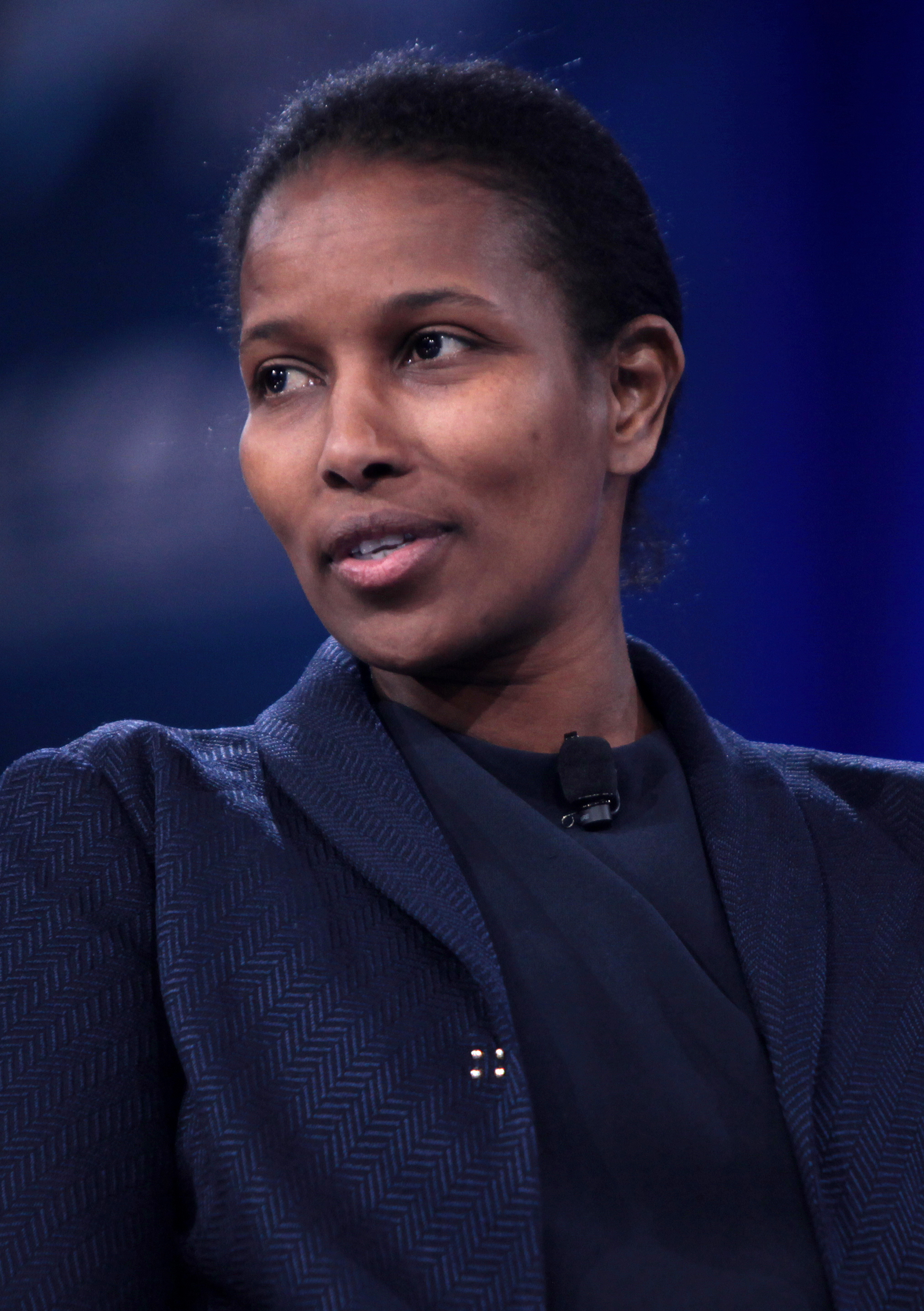
Ayaan Hirsi Ali , née le 13 novembre 1969 à Mogadiscio , est une femme politique et écrivaine néerlando-américaine d'origine somalienne.
Fuyant la Somalie, elle obtient l'asile politique aux Pays-Bas où elle s'installe et étudie, puis travaille pour les services d'immigration néerlandais comme traductrice. Elle est élue représentante du royaume à la Seconde Chambre des États généraux de 2003 à 2006, dans laquelle elle siège pour le Parti populaire libéral et démocrate après avoir brièvement adhéré au Parti travailliste de 2001 à 2002. Elle est connue pour son militantisme contre l'excision et ses prises de position sur l'islam, sa religion de naissance qu'elle rejette aujourd'hui. Elle est menacée de mort par Mohammed Bouyeri, assassin du cinéaste Theo van Gogh, notamment à la suite de sa participation au court-métrage Submission du réalisateur, dénonçant les violences faites aux femmes dans les pays musulmans. Elle reçoit le premier prix Simone de Beauvoir pour la liberté des femmes en 2008 et la citoyenneté américaine en 2013. Wikipedia
Ayaan Hirsi Ali livre Infidel
Introduction
Infidel (2007)
Ayaan Hirsi Ali livre Infidel
Source: Infidel (2007), Ch. 3
Quoted in “Ayaan Hirsi Ali slams protesters who prevented her visit to Australia,” Emily Ritchie, The Australian, (April 5, 2017) https://www.theaustralian.com.au/news/nation/ayaan-hirsi-ali-hits-back-at-muslim-women-for-carrying-water-for-extremists/news-story/163a1a49c66d32a5501718d2984894ed
Ayaan Hirsi Ali livre Infidel
Source: Infidel (2007), Ch. 5
Hirsi Ali: "Never confuse Islamic Sharia and the Muslims who really mean it with those extremist Christians who live in the United States" http://www.jihadwatch.org/archives/2007/07/017367print.html, Jihad Watch, 13 July 2007 <br class="br"> Ayaan Hirsi Ali in a video interview http://web.archive.org/web/20070703045949/http://www.cbc.ca/onthemap/fullpage.php?id=87, CBC News, 11 July 2007
A culture that celebrates femininity and considers women to be the masters of their own lives is better than a culture that mutilates girls' genitals and confines them behind walls and veils or flogs or stones them for falling in love. A culture that protects women's rights by law is better than a culture in which a man can lawfully have four wives at once and women are denied alimony and half their inheritance. A culture that appoints women to its supreme court is better than a culture that declares that the testimony of a woman is worth half that of a man.
Nomad: A Personal Journey Through the Clash of Civilizations (2010)
Epilogue: Letter to My Unborn Daughter (p. 273)
2010s, Nomad: A Personal Journey Through the Clash of Civilizations (2010)
Conclusion: The Miyé and the Magaalo (p. 261)
2010s, Nomad: A Personal Journey Through the Clash of Civilizations (2010)
“A mosque is an island of gender apartheid.”
Source: 2010s, Nomad: A Personal Journey Through the Clash of Civilizations (2010), Chapter 16, “Seeking God but Finding Allah” (p. 252)
“Contempt for women is inscribed in the works of Saint Paul.”
Source: 2010s, Nomad: A Personal Journey Through the Clash of Civilizations (2010), Chapter 16, “Seeking God but Finding Allah” (p. 241)
Source: 2010s, Nomad: A Personal Journey Through the Clash of Civilizations (2010), Chapter 15, “Dishonor, Death, and Feminists” (p. 235)
Source: 2010s, Nomad: A Personal Journey Through the Clash of Civilizations (2010), Chapter 15, “Dishonor, Death, and Feminists” (pp. 233-234)
Source: 2010s, Nomad: A Personal Journey Through the Clash of Civilizations (2010), Chapter 15, “Dishonor, Death, and Feminists” (p. 232)
Source: 2010s, Nomad: A Personal Journey Through the Clash of Civilizations (2010), Chapter 15, “Dishonor, Death, and Feminists” (p. 231)
Source: 2010s, Nomad: A Personal Journey Through the Clash of Civilizations (2010), Chapter 14, “Opening the Muslim Mind: An Enlightenment Mind” (p. 212)
Source: 2010s, Nomad: A Personal Journey Through the Clash of Civilizations (2010), Chapter 13, “Violence and the Closing of the Muslim Mind” (p. 191)
“In the madrassa, questions were not welcome; they were considered impertinent.”
Source: 2010s, Nomad: A Personal Journey Through the Clash of Civilizations (2010), Chapter 13, “Violence and the Closing of the Muslim Mind” (p. 186)
Source: 2010s, Nomad: A Personal Journey Through the Clash of Civilizations (2010), Chapter 11, “School and Sexuality” (p. 154)
Source: 2010s, Nomad: A Personal Journey Through the Clash of Civilizations (2010), Chapter 11, “School and Sexuality” (p. 152)
Source: 2010s, Nomad: A Personal Journey Through the Clash of Civilizations (2010), Chapter 10, “Islam in America” (p. 134)
Source: 2010s, Nomad: A Personal Journey Through the Clash of Civilizations (2010), Chapter 9, “America” (p. 113)
Source: 2010s, Nomad: A Personal Journey Through the Clash of Civilizations (2010), Chapter 6, “My Cousins” (p. 81)
Source: 2010s, Nomad: A Personal Journey Through the Clash of Civilizations (2010), Chapter 5, “My Brother’s Son” (p. 71)
Source: 2010s, Nomad: A Personal Journey Through the Clash of Civilizations (2010), Chapter 4, “My Brother’s Story” (p. 58)
Introduction (p. xiv)
2010s, Nomad: A Personal Journey Through the Clash of Civilizations (2010)


