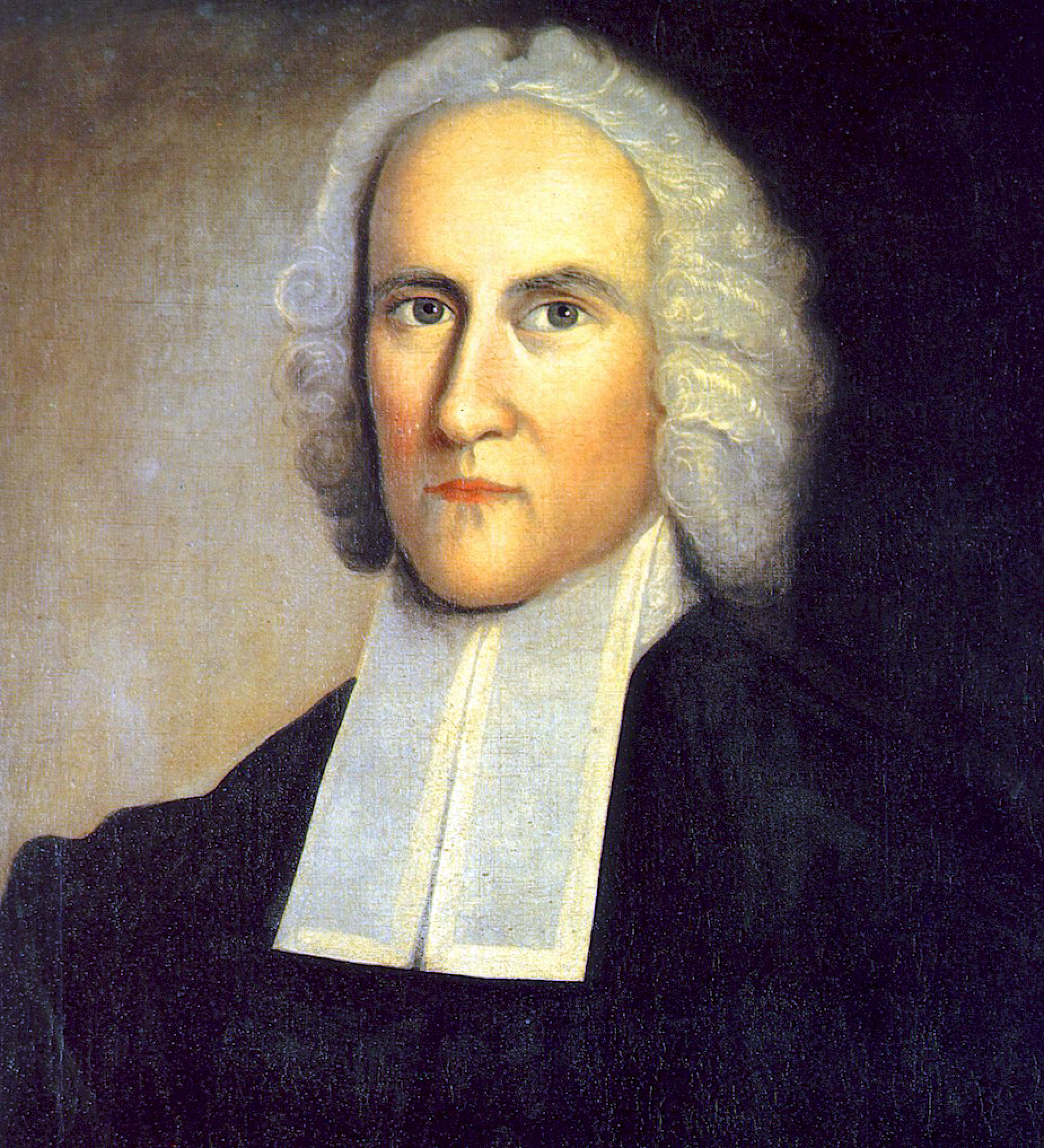
Jonathan Edwards citations
Page 3

Jonathan Edwards, né le 5 octobre 1703 à East Windsor et mort le 22 mars 1758 à Princeton , est un pasteur, théologien et métaphysicien américain, et un missionnaire auprès des Amérindiens. Il est « communément reconnu comme étant le premier et le plus important théologien philosophique d'Amérique », et l'un des plus grands intellectuels américains. L'œuvre théologique d'Edwards est très largement fournie, mais elle est souvent associée à la défense de la théologie réformée, à la métaphysique du déterminisme théologique et au puritanisme. De récentes études ont mis en valeur le fait qu'Edwards ait complètement basé son œuvre sur les concepts de beauté, d'harmonie et d'adéquation éthique, et le fait que les Lumières occupent une place centrale dans son approche.

Il exerça une influence cruciale dans le premier grand réveil, et supervisa les commencements du réveil religieux en 1733-1735 à son église de Northampton au Massachusetts. Edwards délivra le sermon « Sinners in the Hands of an Angry God », un classique des débuts de la littérature américaine, lors d'une autre vague de réveil en 1741, à la suite de la visite de George Whitefield dans les Treize colonies. Il est largement connu pour beaucoup de ses œuvres : The End For Which God Created the World, The Life of David Brainerd, qui servit à inspirer des milliers de missionnaires à travers le XIXe siècle, et Religious Affections que beaucoup de réformés lisent même aujourd'hui.

✵ 5. octobre 1703 – 22. mars 1758  •  Autres noms جوناثان إدواردز, Ҷонатан Эдвардс, جاناتان ادواردز, Ionathan Edwards
Jonathan Edwards photo
Jonathan Edwards: 79 citations0 J'aime

Jonathan Edwards: Citations en anglais

“You have reason to wonder that you are not already in hell.”

Jonathan Edwards livre Sinners in the Hands of an Angry God

Sinners in the Hands of an Angry God (1741)

“I assert that nothing ever comes to pass without a cause.”

Jonathan Edwards livre The Freedom of the Will

The Freedom of the Will (1754).

“The beauty of the world consists wholly of sweet mutual consents, either within itself or with the supreme being.”

Jonathan Edwards

"The Beauty of the World" (c.1725), from the notebook The Images of Divine Things, The Shadows of Divine Things, The Language and Lessons of Nature (published 1948).

“A greater absurdity cannot be thought of than a morose, hard-hearted, covetous, proud, malicious Christian.”

Jonathan Edwards

Source: Dictionary of Burning Words of Brilliant Writers (1895), p. 106.

“This dictate of common sense.”

Jonathan Edwards livre The Freedom of the Will

The Freedom of the Will (1754).

“But to him that worketh not, but believeth on him that justifieth the ungodly, his faith is counted for righteousness.”

Jonathan Edwards

-Romans iv. 5. The following things may be noted in this verse:...That justification respects a man as ungodly. This is evident by these words,—that justifieth the ungodly; which cannot imply less, than that God, in the act of justification, has no regard to any thing in the person justified, as godliness, or any goodness in him; but that immediately before this act, God beholds him only as an ungodly creature...
Justification By Faith Alone (1738)

Auteurs similaires

Martin Luther photo
Martin Luther2
théologien allemand, père du protestantisme None
François de Sales photo
François de Sales2
évêque de Genève, saint catholique, docteur de l’Église None
Blaise Pascal photo
Blaise Pascal66
mathématicien, physicien, inventeur, écrivain et philosophe… None
Galileo Galilei photo
Galileo Galilei2
physicien, philosophe et astronome italien None
Thomas Paine photo
Thomas Paine2
intellectuel, pamphlétaire, révolutionnaire anglais puis am… None
Benjamin Franklin photo
Benjamin Franklin8
un des Pères fondateurs des Etats Unis d'Amérique, politici… None
Leonhard Euler photo
Leonhard Euler1
mathématicien, physicien, philosophe, théologien et orienta… None
François Rabelais photo
François Rabelais41
auteur français du 16e siècle None
Louis XVI photo
Louis XVI10
roi de France et de Navarre None